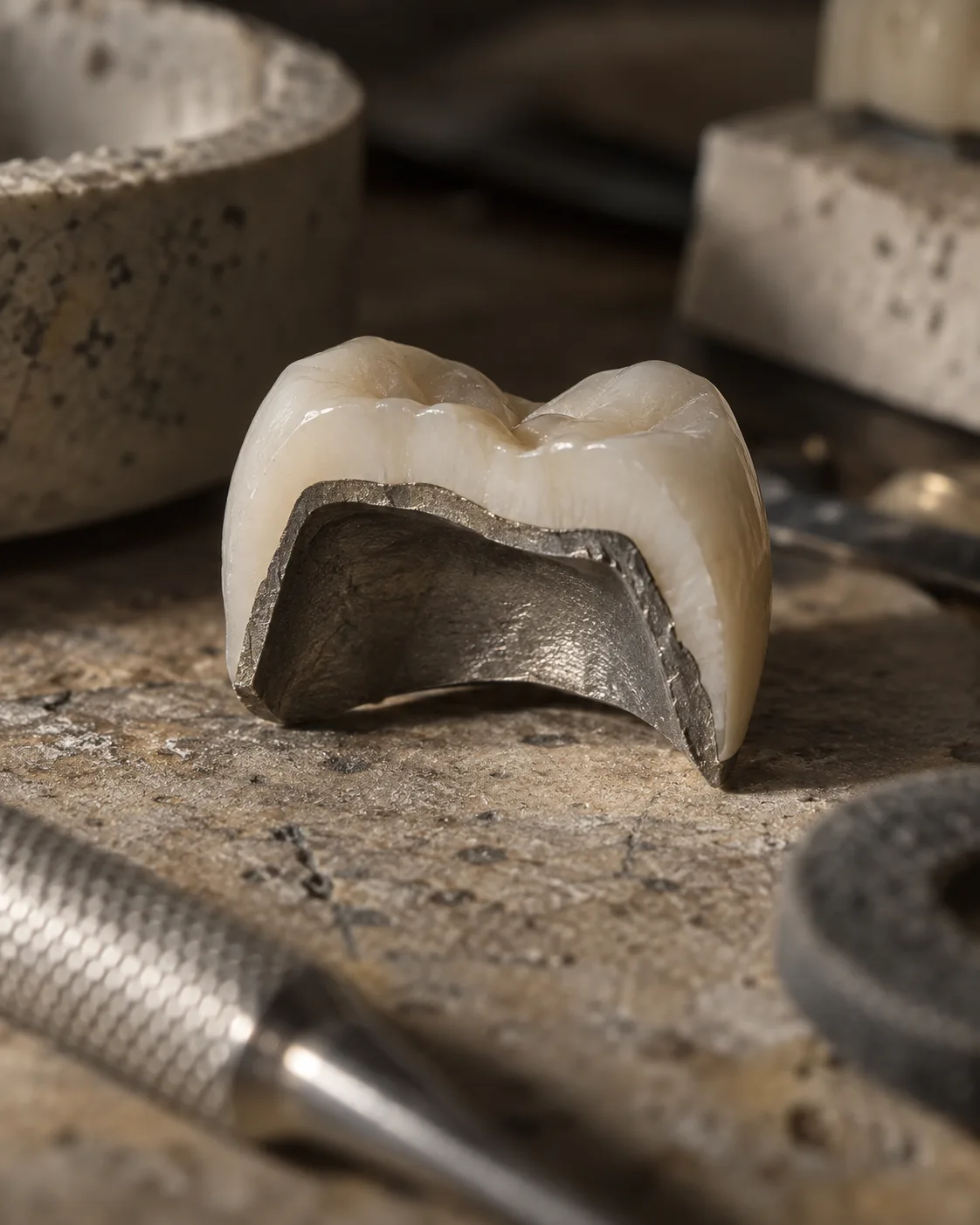
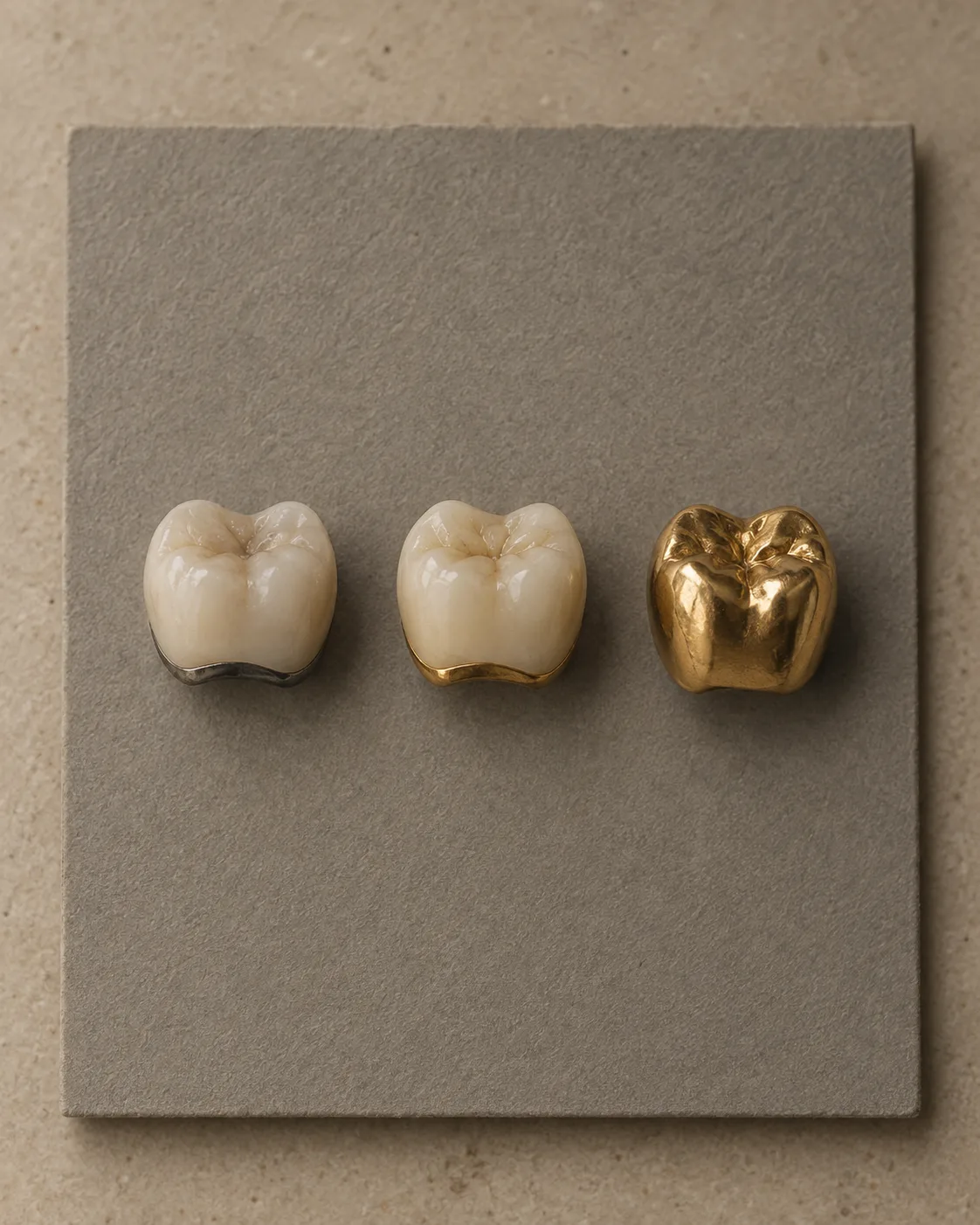
A ceramic-metal crown - often called porcelain-fused-to-metal - is a cast metal cap with porcelain baked over it. It is the oldest crown design still in routine use, it is the cheapest thing we fit, and there are still cases where it is the right answer.
No payment taken here. Your price is confirmed after a clinical assessment - and that is the price you pay.
01
What a porcelain-fused-to-metal crown is
A metal shell made to fit the tooth, with porcelain fired over the top. The metal gives the strength, the porcelain gives the appearance. It is the crown most people over forty already have somewhere in their mouth.
The short answer. A metal porcelain crown in Antalya is £100 a tooth - the cheapest crown on our list. It is strong and proven, and the compromise is appearance: a dark line can show at the gum as gums recede.
It has been used for decades and there is very little about how it behaves that is not known. That is worth something.
02
What a metal-ceramic crown does well
Strength at a low price. The metal substructure does not fracture, which makes it dependable on back teeth and for bridges spanning a gap.
At £100 a tooth it is the most economical way to restore a molar properly, and on a tooth nobody sees, the reasons to spend more are thin.
03
The honest drawbacks
The porcelain is opaque, because it has to hide the metal underneath. That reads as slightly flat next to natural enamel, which is why it belongs at the back.
As gums recede over the years, the metal edge can show as a grey line at the margin. It is the commonest reason these crowns get replaced, and it is cosmetic rather than a failure.
It also needs more tooth removed than zirconia, because there must be room for a metal core and a porcelain covering rather than one material.
04
What metal-ceramic crowns cost
£100 a tooth, the lowest crown price on our list. For comparison, zirconia is £170 and E-max is £200.
On a molar the difference buys strength you may not need. On a tooth that shows when you smile, it buys the difference between a crown people notice and one they do not.
05
Having metal-ceramic crowns fitted in Antalya
One trip of about a week: consultation and X-rays, preparation, temporaries while the lab casts the metal and fires the porcelain, then the fit.
If some of your crowns are visible and some are not, mixing materials across the plan is normal and sensible - metal-ceramic at the back, E-max or zirconia where it shows.
Shade, metal and porcelain
How a metal-ceramic crown is designed and made
A metal-ceramic crown is two things joined: a thin cast metal cap for strength, and porcelain layered over it for the colour. The shade is chosen with you, the metal is cast for your tooth alone, and the crown is tried in before it is cemented. This is what goes into it.
01
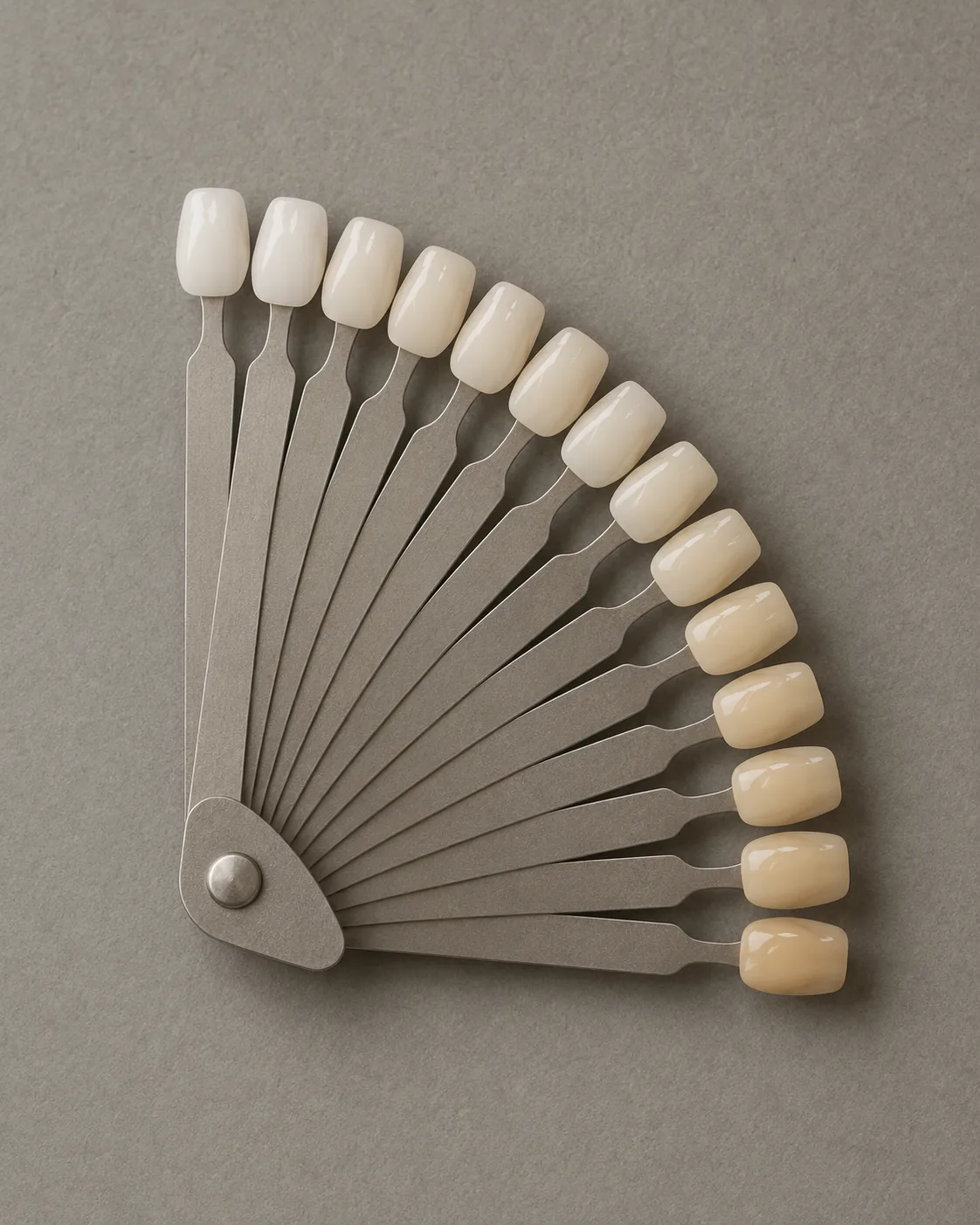
The shade
The porcelain is matched from the standard shade guide against your own teeth in daylight. Porcelain over metal is a little more opaque than an all-ceramic crown, which is why a metal-ceramic crown suits a back tooth better than a front one, and why the shade is checked against the teeth beside it rather than the chart alone.
02
The metal underneath
A thin cap of alloy, called a coping, is cast to fit your prepared tooth. On a ceramic-metal crown it is a hard, pale alloy; on a gold-ceramic crown it is a gold alloy, which is kinder to the tooth opposite and gives the porcelain a warmer base.
03
The porcelain over it
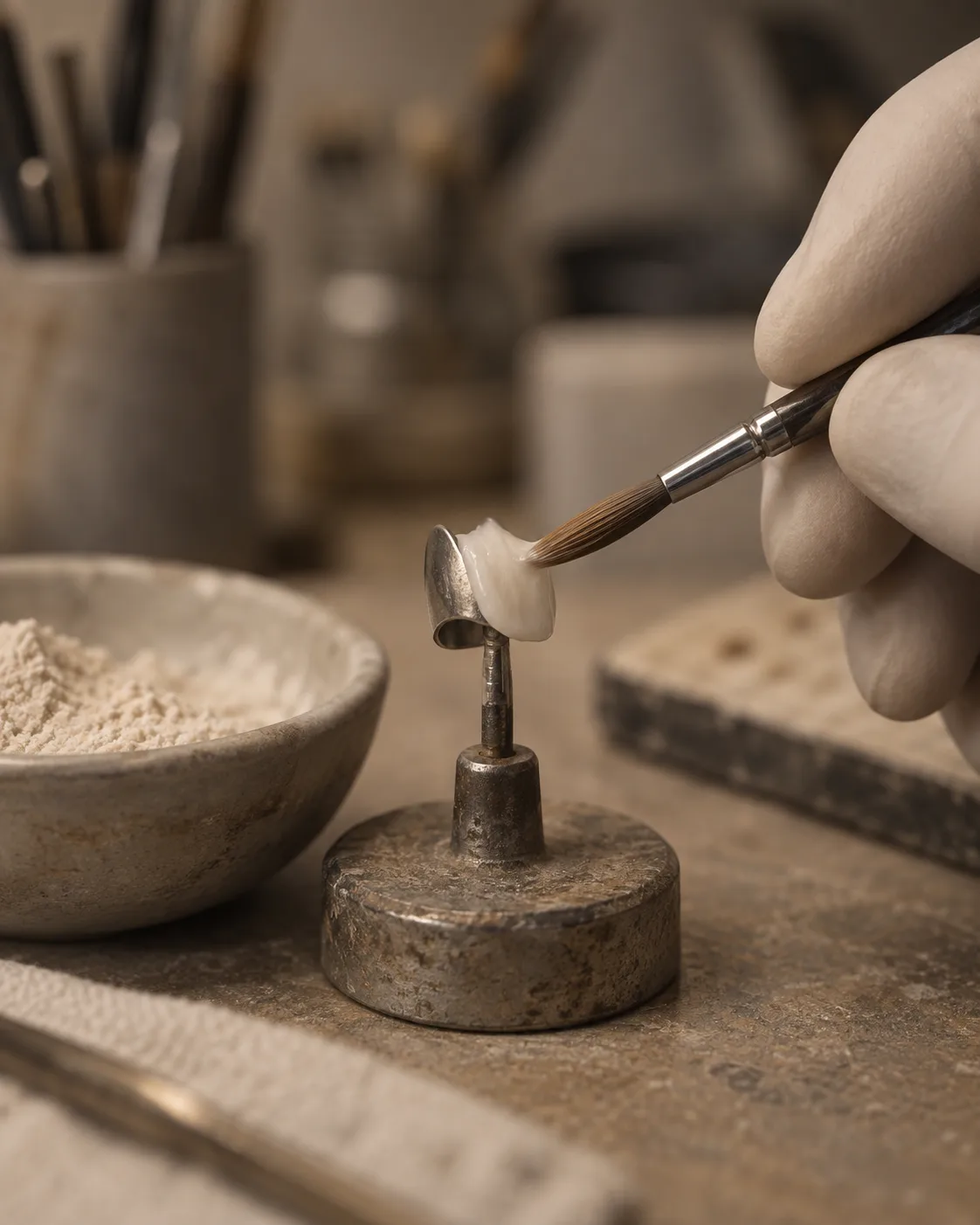
A pale opaque layer hides the metal first, then the body and enamel porcelains are built up by hand and fired. The gum line is where a metal crown shows its age: as the gum recedes a dark line can appear, which is the one thing to weigh against the strength.
04
The metal
Two alloys are used under porcelain, and the difference is more about what happens over the years than how it looks on day one. Your plan names which one, per tooth.
Alloy
What it is
How it behaves
Best for
Base metal (cobalt-chromium)
A hard, pale, nickel-free alloy.
Very strong and rigid. The least expensive crown with porcelain on it.
Back teeth and bridges where cost matters.
Gold alloy
A high-noble alloy, warm in colour.
Gentle on the opposing tooth, seals the edge well and gives the porcelain a warmer base.
Back teeth that will do a lifetime of chewing.
Zirconia, for comparison
A white ceramic with no metal at all.
As strong as metal, with no dark line at the gum.
Anywhere the crown will show.
Six steps in the laboratory upstairs
How each crown is made
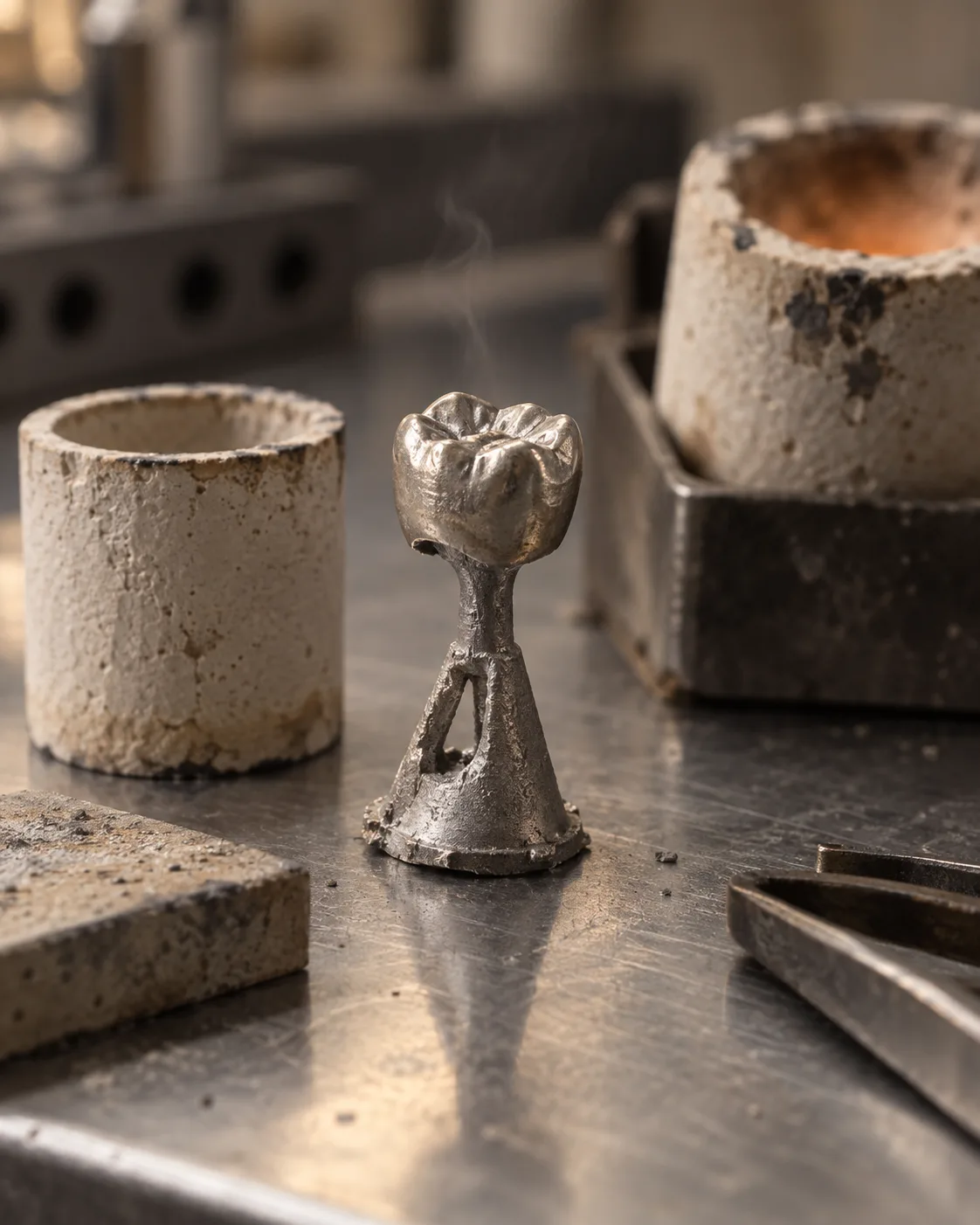
Casting is the old craft and it is still done by hand: a wax pattern, a mould, molten metal. The porcelain on top is built in layers, the same way as an all-ceramic crown.
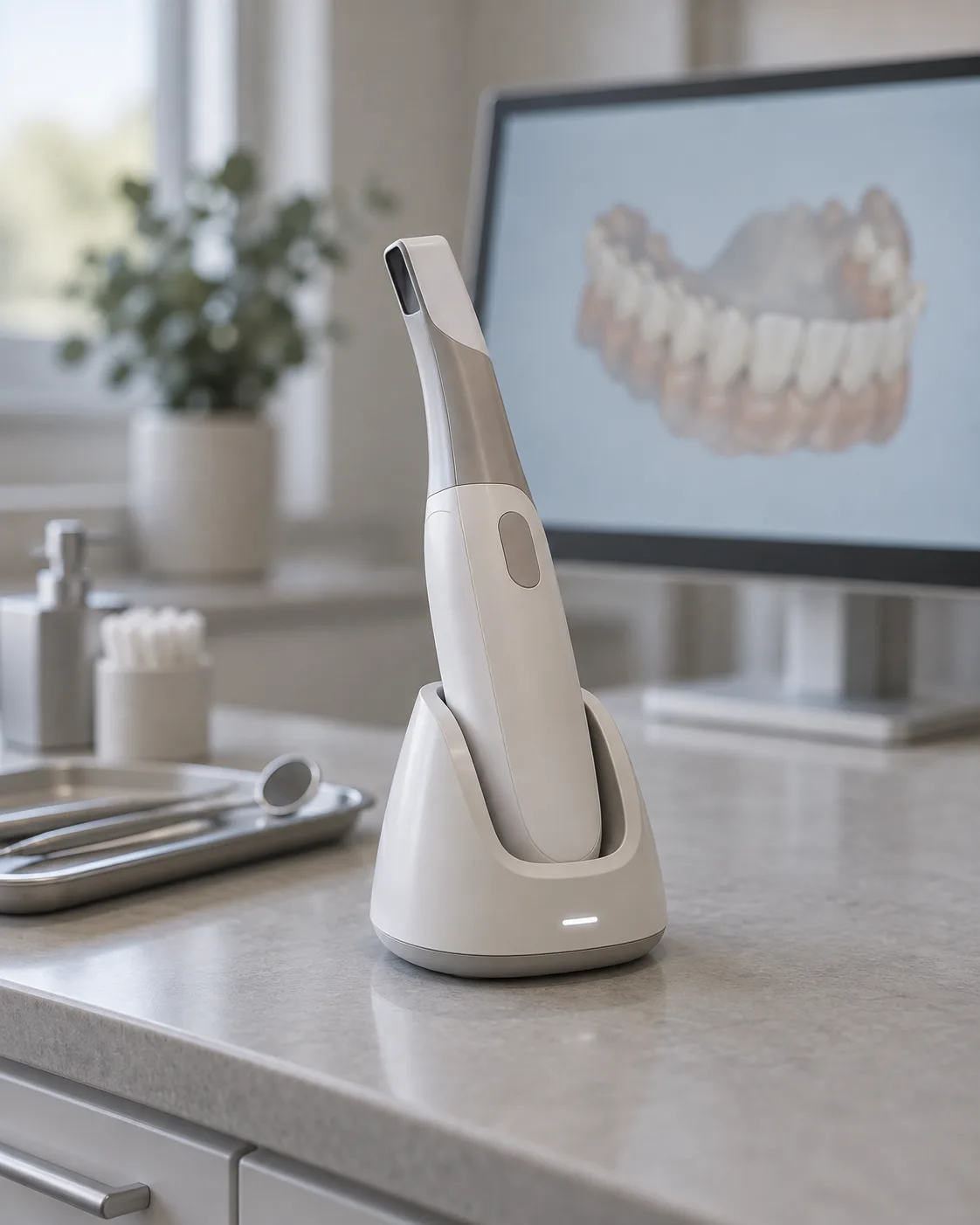
01The scanYour prepared tooth is scanned, or an impression is taken, and a stone model is poured.
02The wax patternThe coping is carved in wax on the model, thin and exact.
03CastingThe wax is set in a mould and burnt out, and the alloy is cast into the space it leaves.
04The coping fittedThe casting is trimmed and checked on the model until it seats without a gap.
05Porcelain layeredOpaque, body and enamel porcelains are brushed on and fired, then glazed to the shade.
06The try-inThe crown is tried in, the bite adjusted, and you approve it before it is cemented.
Answered plainly
Metal-ceramic crowns: your questions answered
Still not sure? A clinician talks it through before you commit to anything.
Tell us what you need. We will price it in writing.
One message and a coordinator replies with an indicative plan and price. Send a photograph of your smile if you have one - it makes the answer better, and it is never a call unless you ask for one.
We use a few cookies to keep the site working - your language, your currency, and your
session if you are signed in. Those are always on because the site cannot work without them.
We would also like to use one that measures how people find us and pays us a commission
on travel booked through the site. That one is entirely your call.
Read the privacy policy.