No payment taken here. Your price is confirmed after a clinical assessment - and that is the price you pay.
01
What gum grafting is
A gum graft rebuilds gum tissue that has receded away from a tooth, covering the exposed root and thickening what is left so it stops retreating.
The short answer. Gum grafting treats receding gums - the sensitivity, the lengthening teeth, the notches you can feel with a fingernail. It is done under local anaesthetic in one appointment per area, and the first ten days are the part that needs planning.
It is a small operation with a long healing tail. That is the honest shape of it: the appointment is unremarkable, and the fortnight afterwards asks more of you than the surgery does.
02
Why gums recede
Two causes account for nearly all of it. Gum disease destroys the attachment and the bone under it. Brushing too hard, usually with a medium or hard brush and a scrubbing action, wears the gum away mechanically - and the people who do this are almost always the ones who care most about their teeth.
After those: grinding, a thin gum type you were born with, teeth standing outside the arch, and old orthodontics that moved a tooth beyond its bone. Knowing which applies to you matters, because grafting without fixing the cause simply buys time.
03
The main gum grafting techniques
Connective tissue graft. Tissue taken from under the surface of the palate and tucked under the gum at the recession. The most predictable, and the standard for root coverage.
Free gingival graft. A surface layer from the palate, placed to thicken gum rather than to cover a root. Tougher tissue, less of a colour match.
Pedicle graft. Gum from immediately beside the site, rotated over while staying attached to its own blood supply. Excellent where there is enough neighbouring tissue.
Donor or collagen matrix. No second site in your mouth, so more comfortable healing, at the cost of a little predictability.
Which one suits you depends on how much gum is left and how thick it is. The plan will name the technique.
04
What materials are used?
Your own tissue (palate) - high success, very natural blend
Named donor collagen / allograft - avoids a palate site, helpful for multiple teeth
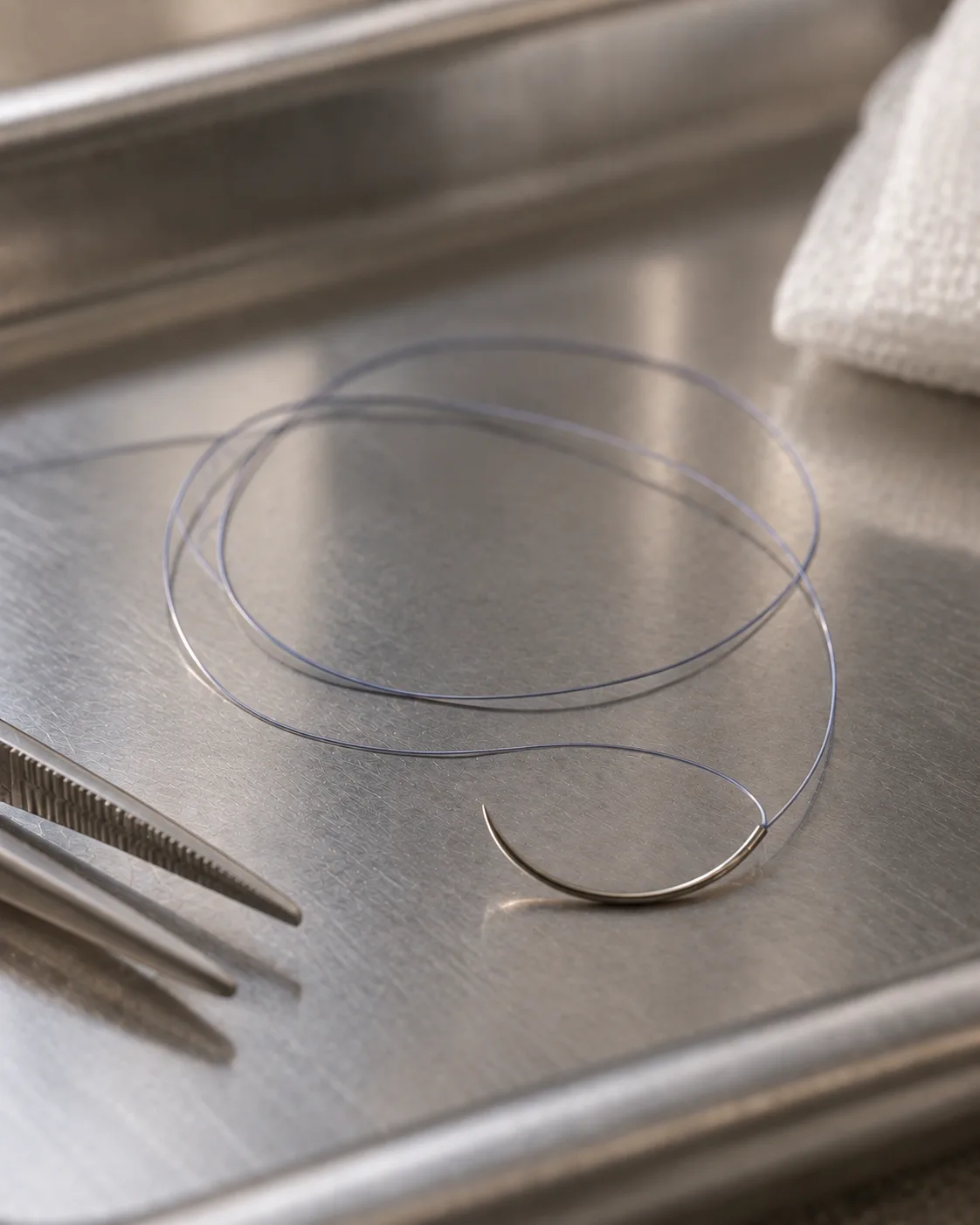
Membranes / sutures - fine stitches to hold tissue while it joins and thickens Your plan lists exact brands and batch details for traceability.
05
The Steps…
01
Consultation & Planning
Photos, gum measurements, and a bite/brush review. If needed, X-rays or a scan. We agree goals, choose the technique, and give a clear written plan with timelines, costs, and aftercare.
02
Treatment Day
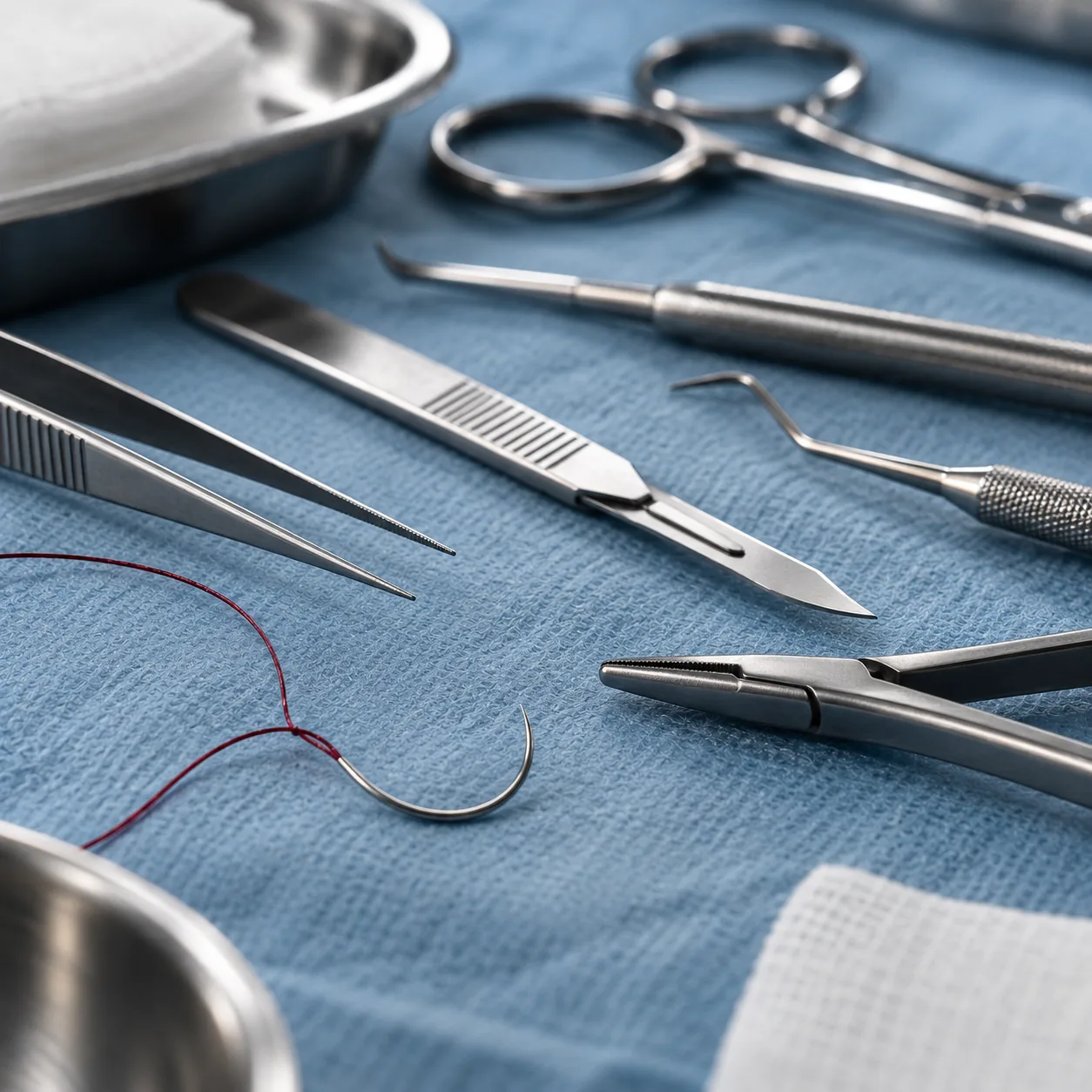
You’re made numb. We prepare the site, place the graft (from your palate or donor), and advance the gum to cover the root. Fine microsutures secure it. A dressing may be used.
03
Early Healing (week 1–2)
Expect mild swelling, a feeling of tightness, and possible bruising colours. Simple pain relief, cool packs, and soft foods help. Do not brush the graft area; use the mouthwash we provide.
04
Review & Suture Removal
Stitches are usually removed 7–14 days after. We check coverage, thickness, and comfort, and revise your cleaning routine.
05
Maturation (weeks 4–8+)
The tissue blends and strengthens. Final colour/shape continues to settle over months. We re-check cause control (brushing, night guard, frenum).
The record
The Process in Pics
07
What recovery from a gum graft is like
The graft site is usually comfortable. The palate, if tissue was taken from it, is the sore part - like a bad pizza burn for about a week, and it is worth knowing that in advance rather than discovering it.
Soft, cool food for the first ten days or so. No brushing the site until you are told, no pulling your lip out to inspect it, and no smoking, which does more to wreck a graft than anything else on the list.
08
What a gum graft actually achieves
Sensitivity to cold usually settles because the exposed root is covered again. The tooth looks shorter, which is to say normal. The gum is thicker, so it resists the next round of recession better than the tissue it replaced.
The most important outcome is the least visible: root surface has no enamel and decays quickly, so covering it protects the tooth from a problem that would otherwise be expensive later.
09
Gum graft aftercare
Do not brush the graft until you are cleared to - rinse as directed instead.
Soft, cool food for around ten days. Nothing sharp, nothing hot.
No smoking. It restricts the blood supply the graft depends on.
Do not lift your lip to look. Tension on the site is what dislodges grafts.
Keep the review appointment even if it feels fine.
Grafts fail on aftercare far more often than on technique. Ten careful days is the whole ask.
10
Alternatives to a gum graft
If recession is mild and stable, the honest answer is often to leave it alone: change to a soft brush, fix the technique, treat the gum disease, and monitor. A deep clean is £110 a jaw here against about £225 at home.
Where sensitivity is the only complaint, desensitising treatment or a composite covering at £140 a tooth handles the symptom without surgery. Where a tooth is loose and the bone has gone, grafting the gum will not save it, and we would rather discuss implants honestly than sell you a graft that buys a year.
11
How long does a gum graft last?
A successful graft is permanent - the tissue integrates and becomes your gum. What is not permanent is the situation around it: if the cause is still there, recession starts again somewhere else.
So the graft lasts as long as the habits do. Soft brush, correct technique, gum disease under control, hygiene visits at £60 a course, and a night guard at £120 if you grind.
Gum, graft and sutures
How a gum graft is planned and done
A gum graft rebuilds the thin or receded gum around a tooth so the root is covered again and the tooth is protected. It is delicate work done under magnification, with a small piece of tissue and sutures finer than a hair. This is what it involves.
01
Why gums recede
Hard brushing, thin gum tissue, grinding, gum disease or the position of a tooth can all pull the gum back until part of the root shows. The root is softer than enamel, so it is sensitive to cold and wears more easily, and the tooth looks longer than its neighbours. A graft covers it again.
02
What the graft is
Most often a small piece of your own tissue, taken from the roof of the mouth, where it heals within a couple of weeks. Where several teeth are involved, or you would rather not have a second site, a processed donor tissue or a collagen membrane can be used instead. The plan says which, and why.
03
Under magnification
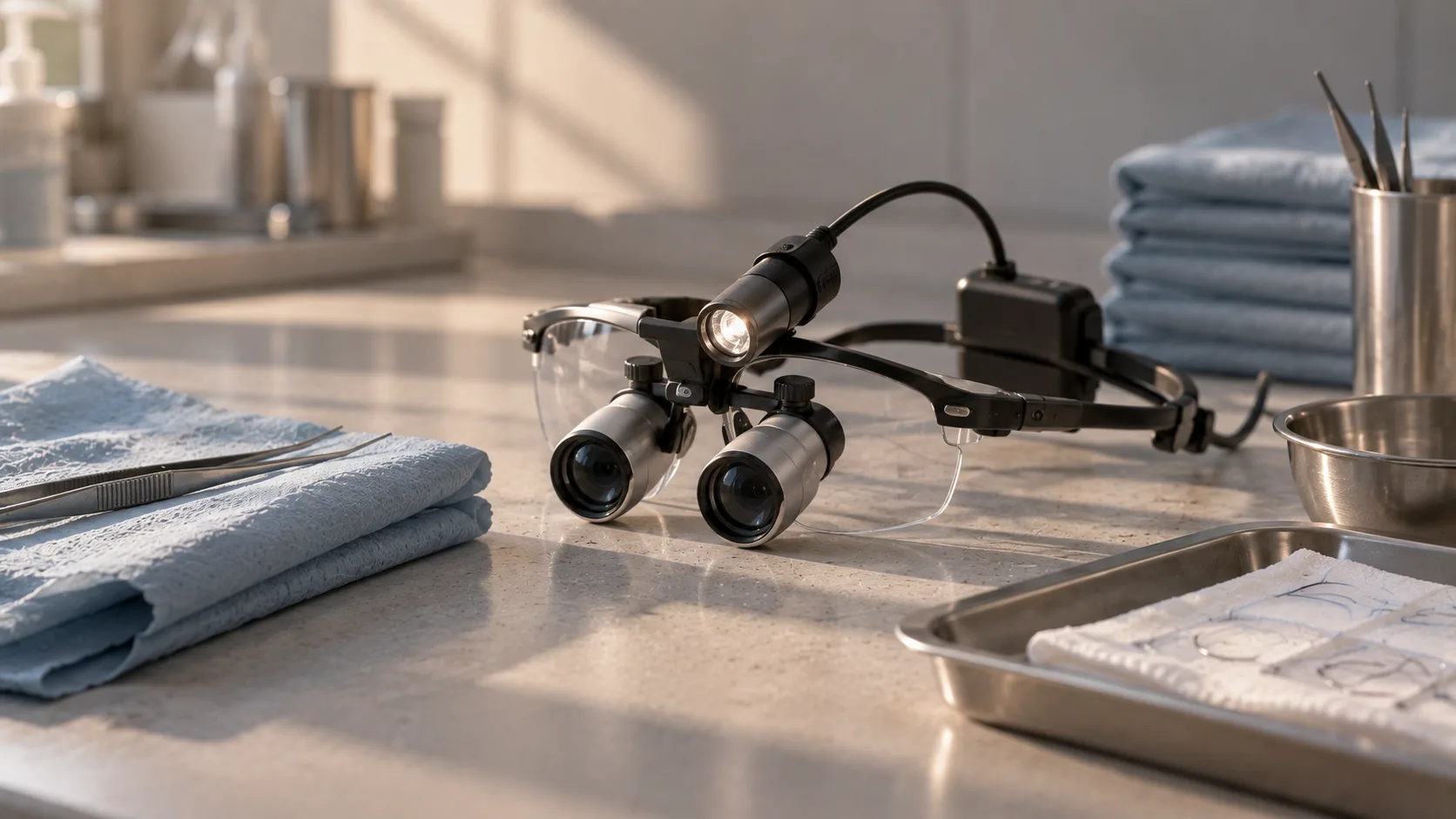
The work is done wearing surgical loupes with a headlight, because the margins are fractions of a millimetre. The tissue is placed under the gum, positioned over the root and held with sutures so fine they are barely visible. Smaller incisions heal faster and leave less to see.
04
The types of graft
Which technique is used depends on how much gum is left, how many teeth are involved and whether you want the root covered or the gum thickened. It is decided from your photographs and a measurement of the gum, before you fly.
Technique
What it is
How it behaves
Best for
Connective tissue graft
Tissue from under the surface of the palate, placed under the gum over the root.
The most reliable way to cover an exposed root; blends in best.
Recession on one or a few teeth where the root shows.
Free gingival graft
A thin strip of surface tissue from the palate, placed where the gum is thin.
Thickens the gum so it stops receding; can look a little paler.
Thin gum around lower front teeth or implants.
Donor tissue or membrane
Processed tissue or a collagen membrane instead of your own.
No second surgical site; heals a little more slowly.
Several teeth at once, or when the palate should be left alone.
Tunnel and pinhole techniques
The gum is loosened through a small opening and moved down over the root.
Few or no sutures, fast healing; needs enough gum to move.
Mild recession across several teeth.
Six steps from measurement to healing
How the graft is done
An appointment of about an hour under local anaesthetic, then two quiet weeks. The result settles over two to three months.
01The assessmentThe recession is measured and photographed and the technique chosen for your gum.
02The graft preparedA small piece of tissue is taken from the palate, or the donor material is prepared, and kept in saline.
03Placed under magnificationThrough a small incision, the graft is positioned under the gum and over the root.
04SuturedHeld in place with sutures finer than a hair, which come out or dissolve in a week or two.
05Dressing and aftercareA soft dressing, an antiseptic rinse instead of brushing the area, cold packs and soft food for a few days.
06The checkAt two weeks the sutures are checked and removed; at three months the gum has settled and the root stays covered.
Answered plainly
Gum grafting: your questions answered
Still not sure? A clinician talks it through before you commit to anything.
Not during - it is done under local anaesthetic. Afterwards the graft site is usually comfortable and the palate, if tissue came from there, is sore for about a week.
How long does healing take?
Ten days of care, two to three weeks to feel normal, and a few months for the tissue to mature and settle to its final look.
Will my gums grow back on their own?
No. Gum tissue does not regenerate over an exposed root. Stopping further recession is possible; reversing it is not, without a graft.
Can I avoid taking tissue from my palate?
Yes, using a donor or collagen matrix. Healing is more comfortable and predictability is marginally lower. Both are offered.
How many teeth can be done at once?
Several adjacent teeth in one appointment. Spreading a whole mouth over more than one visit is usually kinder than doing it all at once.
What if I smoke?
Then the graft is much more likely to fail. Stopping for two weeks either side genuinely changes the odds, and we will say so rather than take the money quietly.
Will it look natural?
Connective tissue and pedicle grafts blend well. A free gingival graft can stay slightly paler, which is why it is chosen for thickening rather than for front teeth.
Can I fly after a gum graft?
Yes, generally after a couple of days. Your plan will build the flight home around the review appointment.
Is gum grafting available on the NHS?
Rarely, and only where there is clear clinical need rather than sensitivity or appearance.
Why choose us
Why Choose Opus Smile for Gum Grafting
01UK-backed soft-tissue care
02Minimal-trauma microsurgery
03Safe, clear, modern
Our focus is your result. We set clear expectations, give honest guidance, and support you from first message to final review. Every partner clinic is vetted for safety, outcomes, and patient experience. Your graft is digitally planned and delivered with microsurgical techniques by internationally trained clinicians, using named, traceable materials.
You keep the best of both worlds: significant savings versus typical UK private fees plus a written warranty and UK-based aftercare. No bait pricing. No pressure. We assess first, explain options, and confirm exact costs only after proper diagnostics.
Hear it from real patients. Explore verified reviews on Trustpilot and see before-and-after stories that show healthier gums, reduced sensitivity, and natural gum lines.
Tell us what you need. We will price it in writing.
One message and a coordinator replies with an indicative plan and price. Send a photograph of your smile if you have one - it makes the answer better, and it is never a call unless you ask for one.
We use a few cookies to keep the site working - your language, your currency, and your
session if you are signed in. Those are always on because the site cannot work without them.
We would also like to use one that measures how people find us and pays us a commission
on travel booked through the site. That one is entirely your call.
Read the privacy policy.