A smile makeover is not a treatment. It is a plan that combines several treatments - whitening, bonding, veneers, crowns, aligners, gum contouring, implants - sequenced so they finish as one result rather than a series of repairs.
A smile makeover is not a treatment. It is a plan that combines several treatments - whitening, bonding, veneers, crowns, aligners, gum contouring, implants - sequenced so they finish as one result rather than a series of repairs.
The short answer. The sequence is what you are buying. Straighten first, whiten second, then match anything permanent to the result. Done in the wrong order you pay twice, because porcelain cannot be lightened after it is made.
Which is why the honest version of this page is mostly about planning, and why any quote given before someone has seen your face and your bite is a product, not a plan.
02
What a makeover is usually fixing
Discolouration whitening alone will not shift. Chips, worn edges, small gaps and asymmetry. Crowding or mild rotations that catch your eye in every photograph. Missing teeth affecting both the bite and the look of the arch.
Most people arrive describing one of these and turn out to have three. That is normal, and it is the reason a single-treatment answer so often disappoints.
03
How we plan a smile makeover
Around your face, your bite and your life rather than around a set of twenty identical teeth. We favour the least destructive option that will actually work, and we sequence care so healing is straightforward and the result is predictable.
You see the options in plain English with photographs and mock-ups where they help. If a plan means removing healthy enamel that does not need removing, we will say so - and if the answer is less treatment than you asked for, we will say that too.
04
What goes into a smile makeover
Whitening - £200 a course. Brightens natural tooth before anything permanent is shade-matched. Almost always first.
Composite bonding - £140 a tooth. Smooths edges, closes small gaps, repairs chips. Cheaper and reversible; stains and wears sooner.
Porcelain veneers - £210 a tooth. Natural-looking and stain-resistant, with minimal preparation where the tooth allows.
Clear aligners. Move the actual teeth before any shaping, which usually means fewer veneers at the end.
Crowns - from £200 a tooth. Full coverage where a tooth is weak or heavily filled.
Gum contouring - £50 a tooth. Small reshaping to balance gum levels and tooth proportions.
Implants - from £300. Replace missing teeth and stabilise the bite.
05
Digital smile design and the mock-up
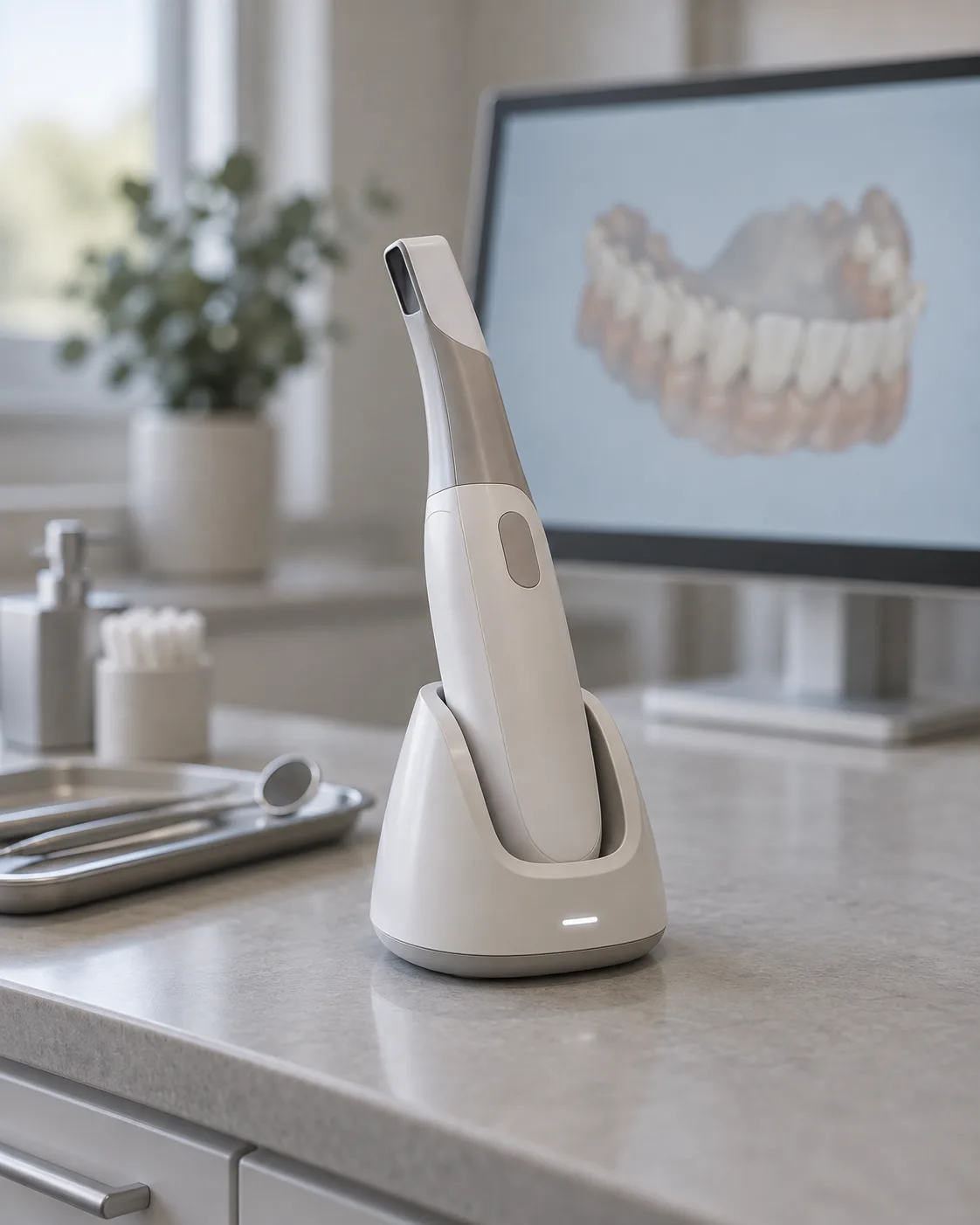
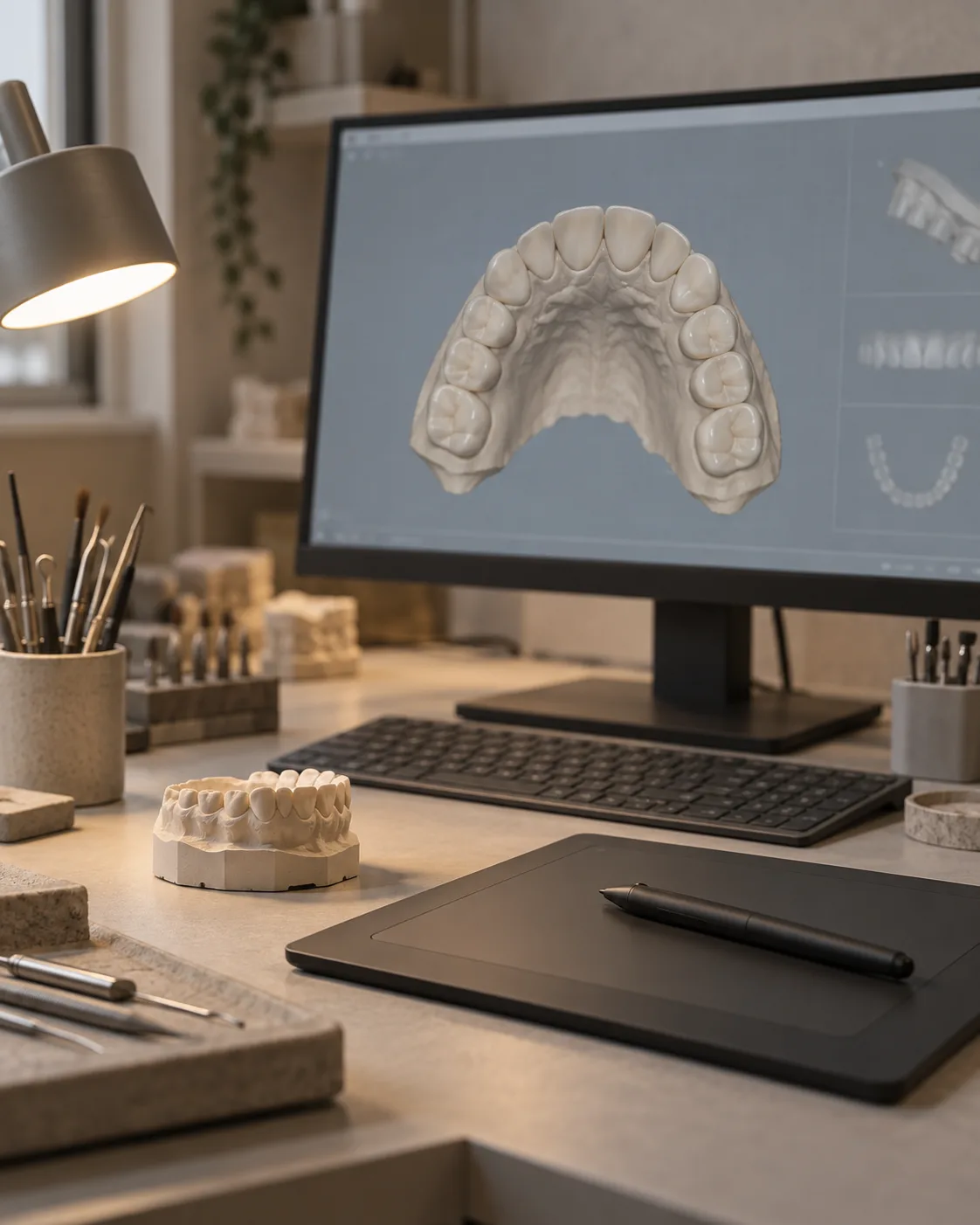
Photographs, video and digital scans are used to model tooth shapes and the smile line against your actual face. You see the proposal before anything is made.
Where it helps, a trial smile is made - a temporary version bonded over your own teeth so you can look at it in daylight, eat with it, and show it to someone whose opinion you trust. Changing your mind at that stage costs nothing. Changing it after the porcelain is fired costs a great deal.
06
Minimal-prep: keeping your own enamel
Enamel does not grow back. Every plan here starts from how little we can remove rather than how much is convenient, because a tooth that keeps its enamel keeps its options.
Bonding or minimal-prep veneers where the tooth allows. Crowns only where the tooth is genuinely weak or heavily restored. Aligners first when the main problem is alignment, because straightening costs no enamel and veneering a crooked tooth costs some permanently.
This is the difference between a makeover and the "Turkey teeth" stories: those were healthy teeth reduced to pegs for full-coverage crowns because it is faster and more forgiving.
07
Your Transformation in 8 Steps
A comprehensive guide to your Smile Makeover journey. From the first scan to the final polish.
01Consult
Consultation & Photos
Photos, X-rays and a CBCT scan if needed. We design the exact implant positions, discuss tooth shape and shade, and give a clear written plan with timing and costs.
02Design
Diagnostics & Design
You are numb and comfortable (with sedation where available). We remove failing teeth if needed, prepare the sites, and place six implants with guided placement.
03Secure
Foundation Care
In many cases you receive a same-day or next-day fixed bridge. It is designed to protect the implants while you heal, so you leave with teeth you can smile with.
04Heal
Whitening / Alignment Phase
Implants fuse to the bone. Follow the soft-food plan, keep the area clean, and attend bite checks to ensure everything heals perfectly.
05Refine
Shape & Surface
Once stable, we take final scans and make your definitive bridge for strength, fit, and looks. We fine-tune the bite for comfort.
06Restore
Replace Gaps
We teach simple cleaning under the bridge and set regular hygiene and review visits to keep everything healthy and functional.
07Polish
Finishing & Polish
A thorough bite check, edge smoothing, final photos, and a custom night guard if you grind your teeth.
08Maintain
Review & Maintenance
Scheduled hygiene visits, home-care coaching, and periodic reviews to protect your results for the long term.
The record
Before & After Photos
09
Choosing between the options
If the problem is colour, whitening is the cheapest and least invasive answer and it removes nothing. If it is shape or edges, bonding does a great deal for £140 a tooth. If it is both, and permanently, veneers at £210 are the durable answer.
If it is alignment, move the teeth. If a tooth is broken down, crown it. If one is missing, replace it. Most makeovers are two or three of these, not all seven, and a good plan is usually shorter than you expect.
10
What a makeover trip is actually like
Preparation appointments are under local anaesthetic. Between preparation and fit you wear temporaries, which are bulkier than the finished work and sensitive to hot and cold for a few days.
Gum contouring is sore for two or three days. Whitening brings short bursts of cold sensitivity. None of it is severe, and all of it is easier when you know it is coming.
11
How long does a smile makeover last?
Different components, different lifespans. Bonding wants redoing every five years or so. Porcelain veneers and crowns carry our guarantee - five years on crowns and full veneers, three on laminates - and in practice run ten to fifteen. Whitening holds one to three years and tops up cheaply.
What shortens all of them is the same short list: grinding, biting things that are not food, and skipped hygiene visits. A night guard at £120 a jaw protects the lot.
12
What a smile makeover costs
There is no single price, because there is no single treatment. What there is instead is a published price for every component, so your plan can be added up in front of you rather than quoted as a round number.
Build your own in the plan builder, or see the full price list. It is for planning only: the real plan and price are confirmed after a clinical assessment, in writing, before you commit to anything.
Shade, shape and material
How your new smile is designed and made
Nothing is taken off a shelf. The colour, the shape of each tooth and the material are decided with you at the planning stage, then each piece is made for you in the laboratory inside the clinic building and tried in before it is fixed. This is what each of those decisions involves.
01
The shade
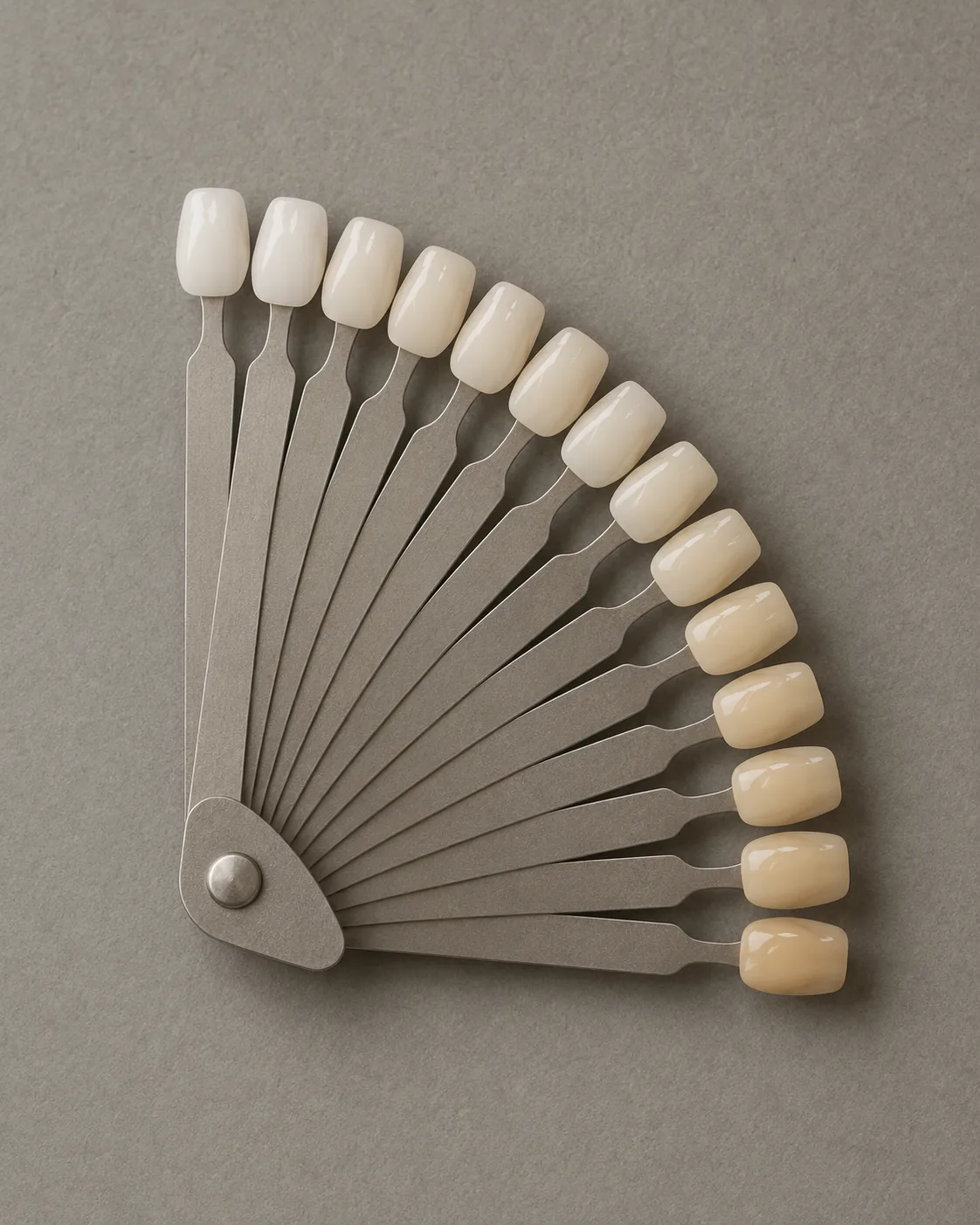
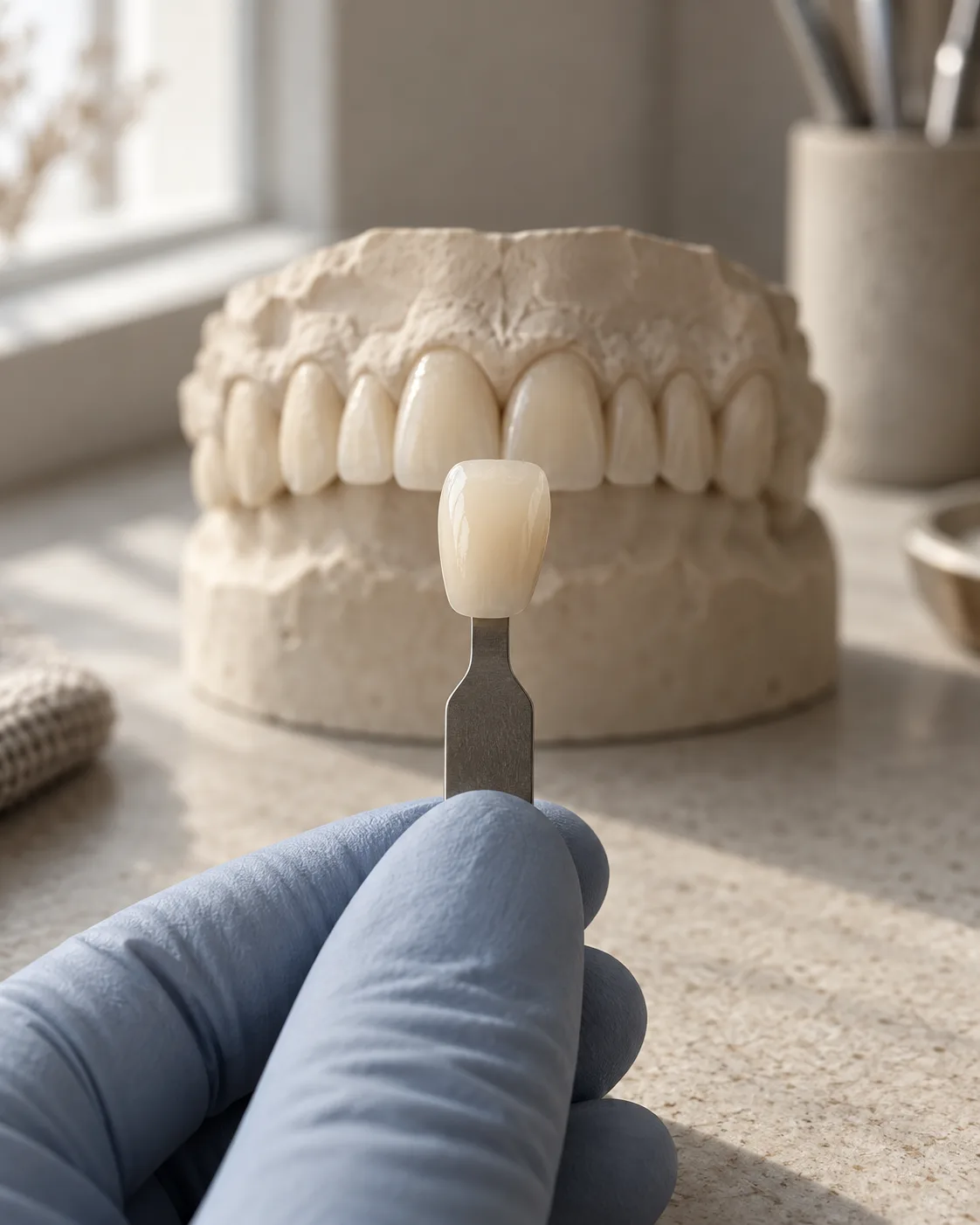
Tooth colour is chosen from a standard shade guide, the same one dentists and laboratories use worldwide. It runs from the bleached whites, BL1 to BL4, into the natural range, where B1 and A1 are the brightest shades a tooth is born with and A2 is the most common colour in adults. The tabs are held against your own teeth, your skin and the whites of your eyes in daylight, because a shade that looks right under a lamp can look wrong outside.
Bleached shadesNatural shades
BL1
BL2
BL3
BL4
B1
A1
B2
D2
A2
C1
C2
D4
A3
D3
B3
A3.5
Where most patients landThe most common natural shade
Two or three steps brighter than your ownThat reads as fresh. Much more than that, and the teeth start to look brighter than the face around them.
Bleached shades suit a full setA single veneer or crown is matched to the teeth beside it, not to the chart, so it disappears among them.
Whiten first if you are keeping natural teethPorcelain does not change colour later. If some of your own teeth stay, they are whitened first and the shade is chosen against the result.
03
The shape
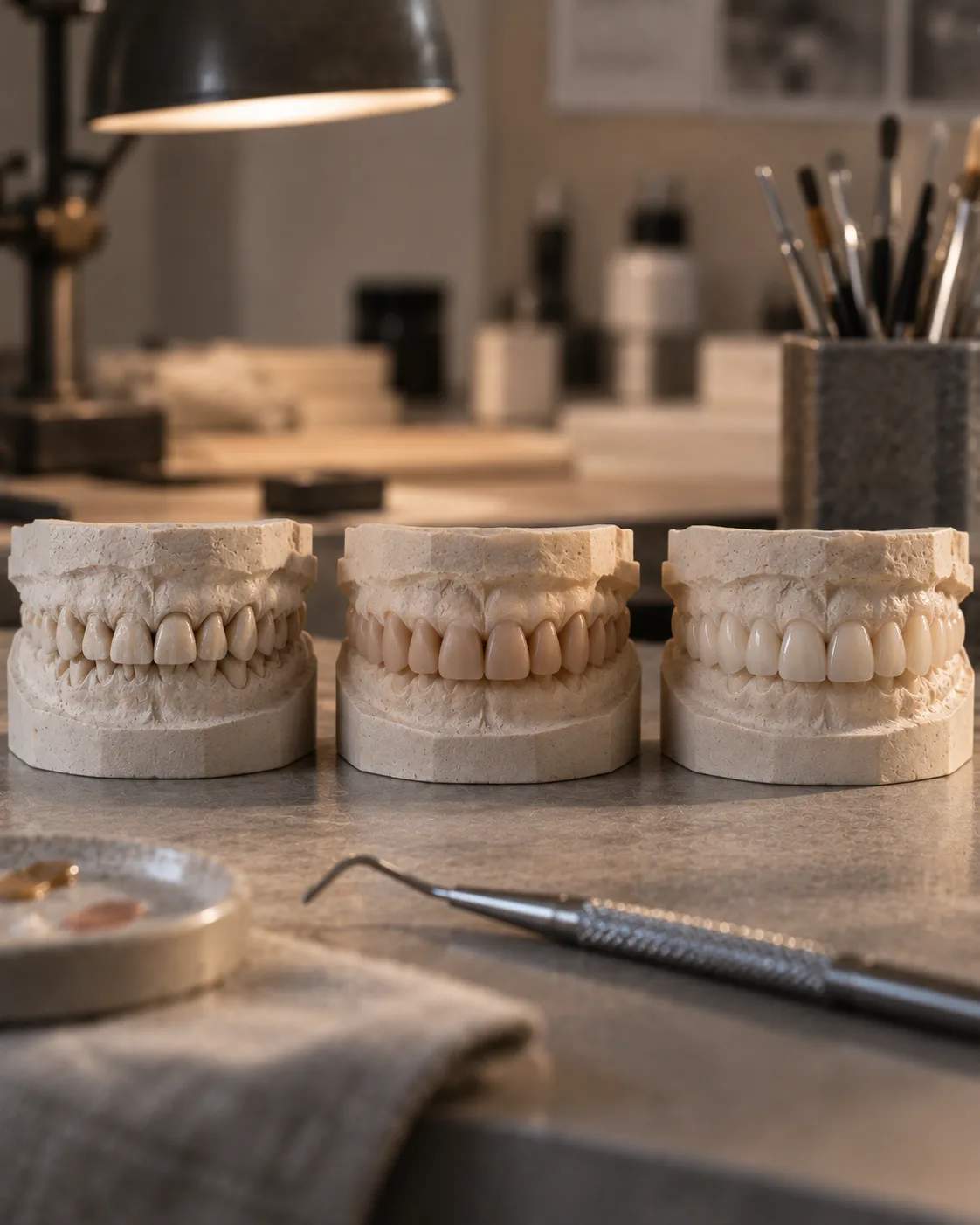
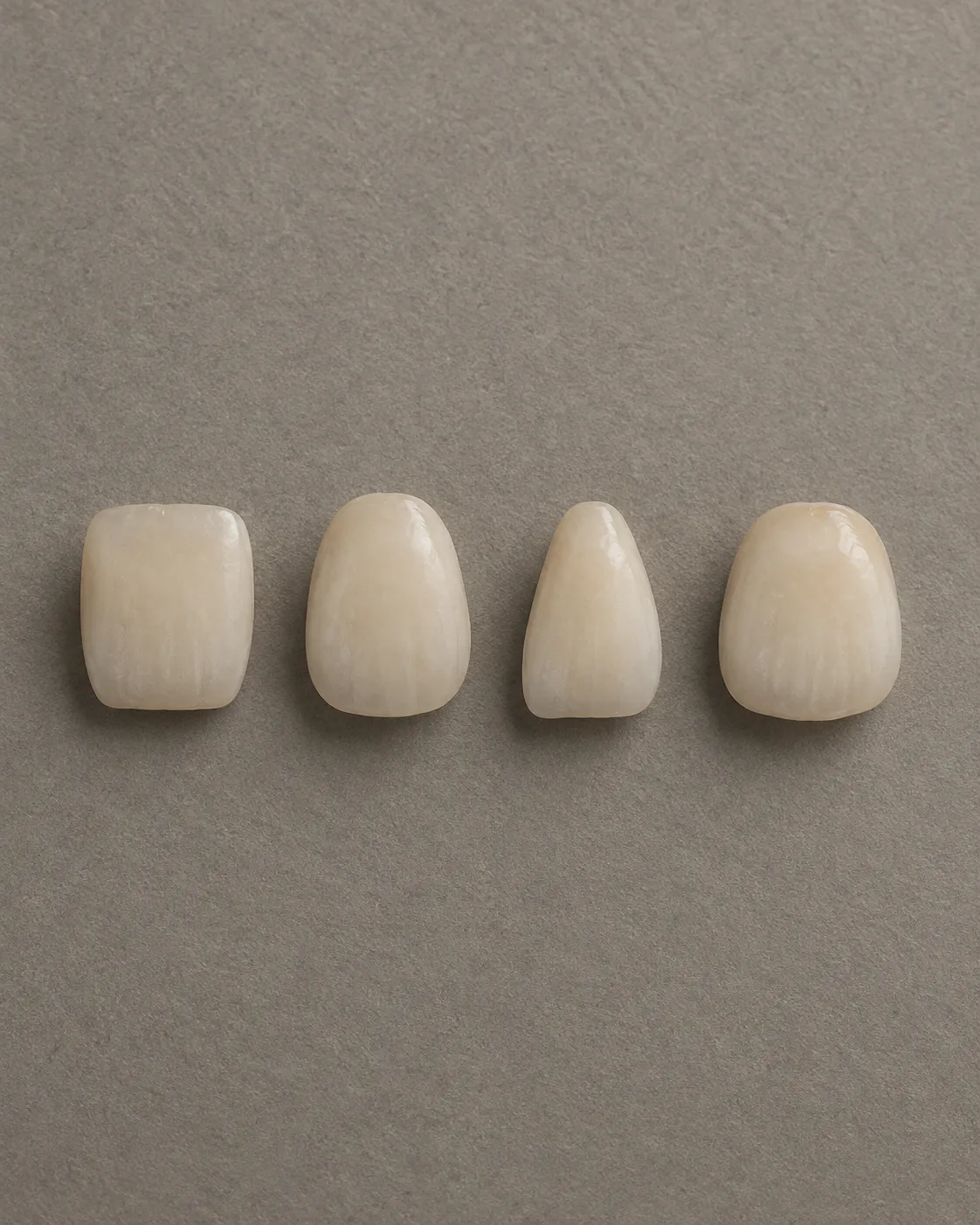
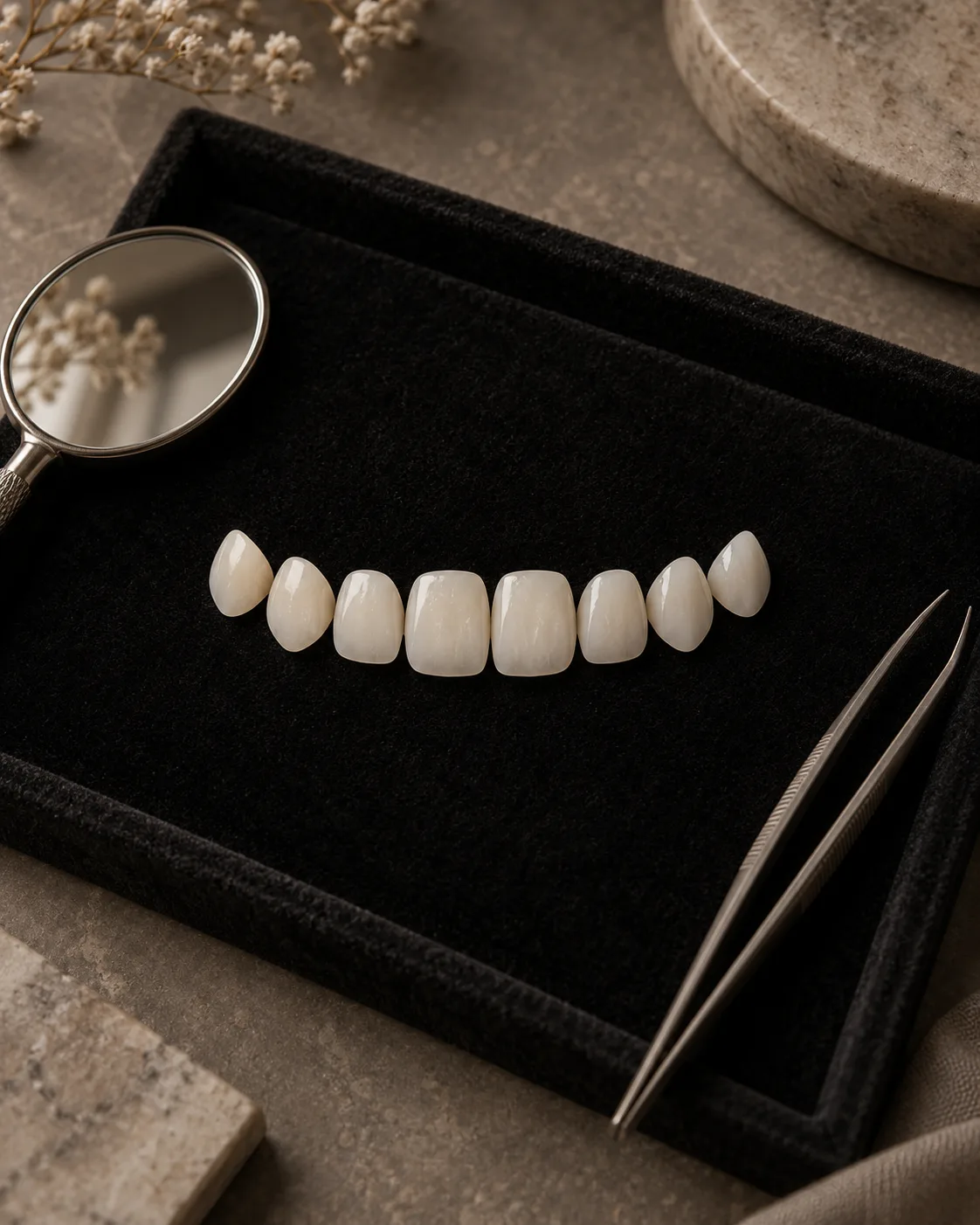
Front teeth come in four broad families, and a smile design starts by choosing the one that suits your face. Length, width and how the edges sit against your lip when you speak are set at the same time.
SquareStraight edges and flat corners. Reads as strong and assured, and suits a broad or angular face.
OvoidSoftly rounded corners on a longer body. The most natural choice for most faces, and the most often chosen.
TaperedNarrower at the gum, widening towards the edge. Delicate and youthful, and suits a slim face.
RoundedFull curves at every corner. Gentle and friendly, often chosen to soften a strong jaw.
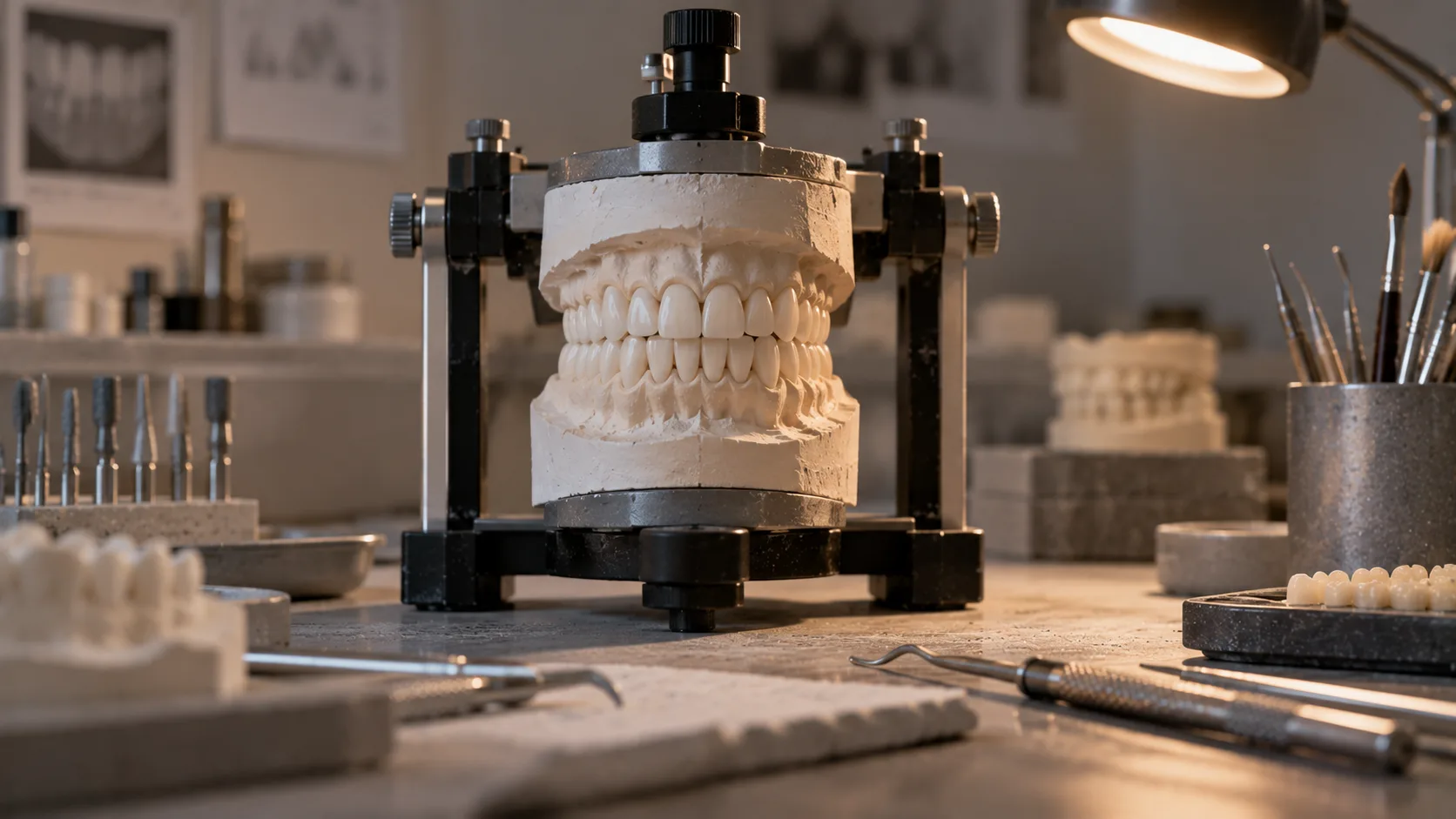
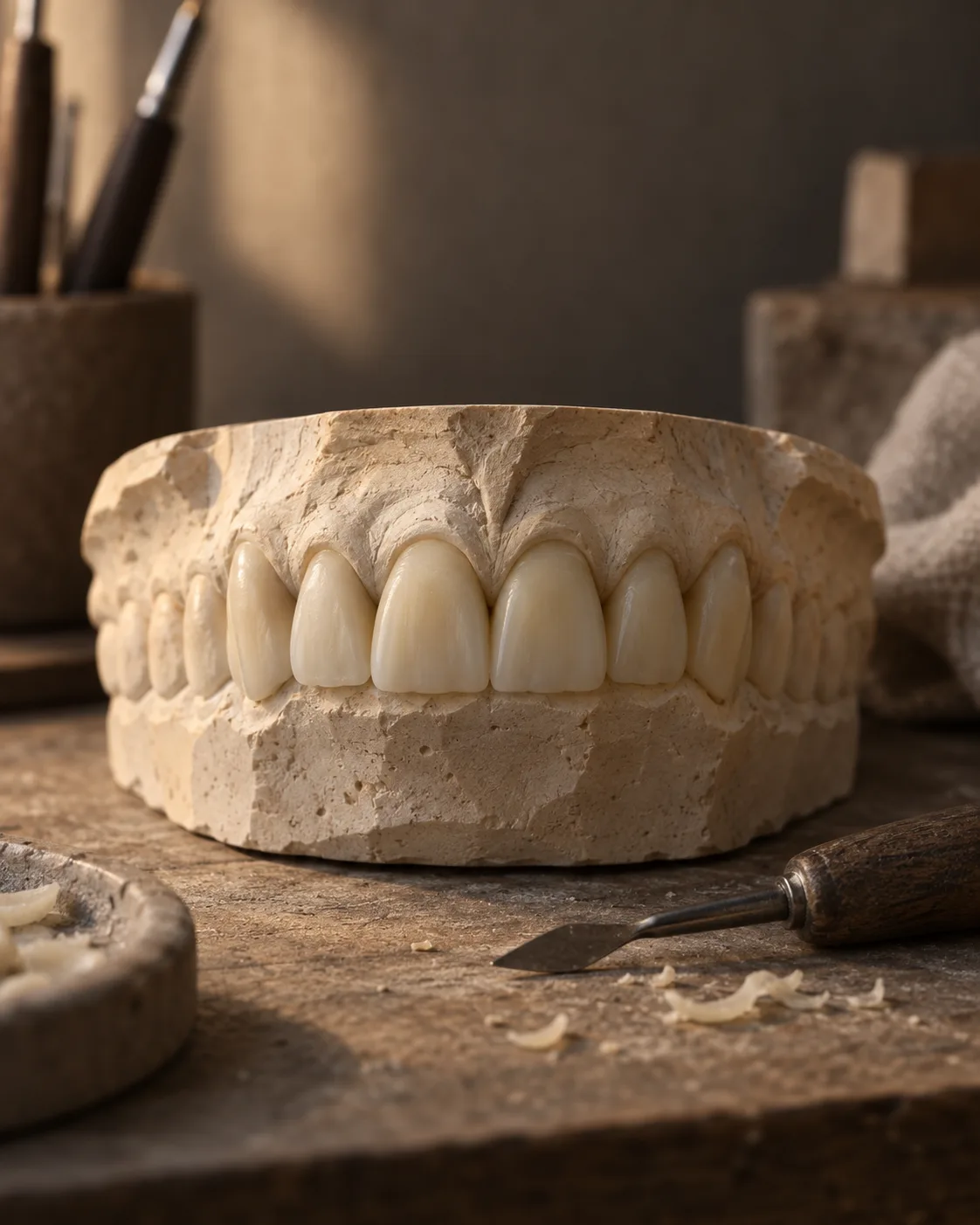
Before any tooth is prepared, the design is built in wax on a model of your teeth and then placed over your own teeth as a temporary mock-up. You see the shade, the shape and the length in your own mouth and in your own photographs. Anything you want changed is changed then, before the porcelain is made, not after.
05
The material
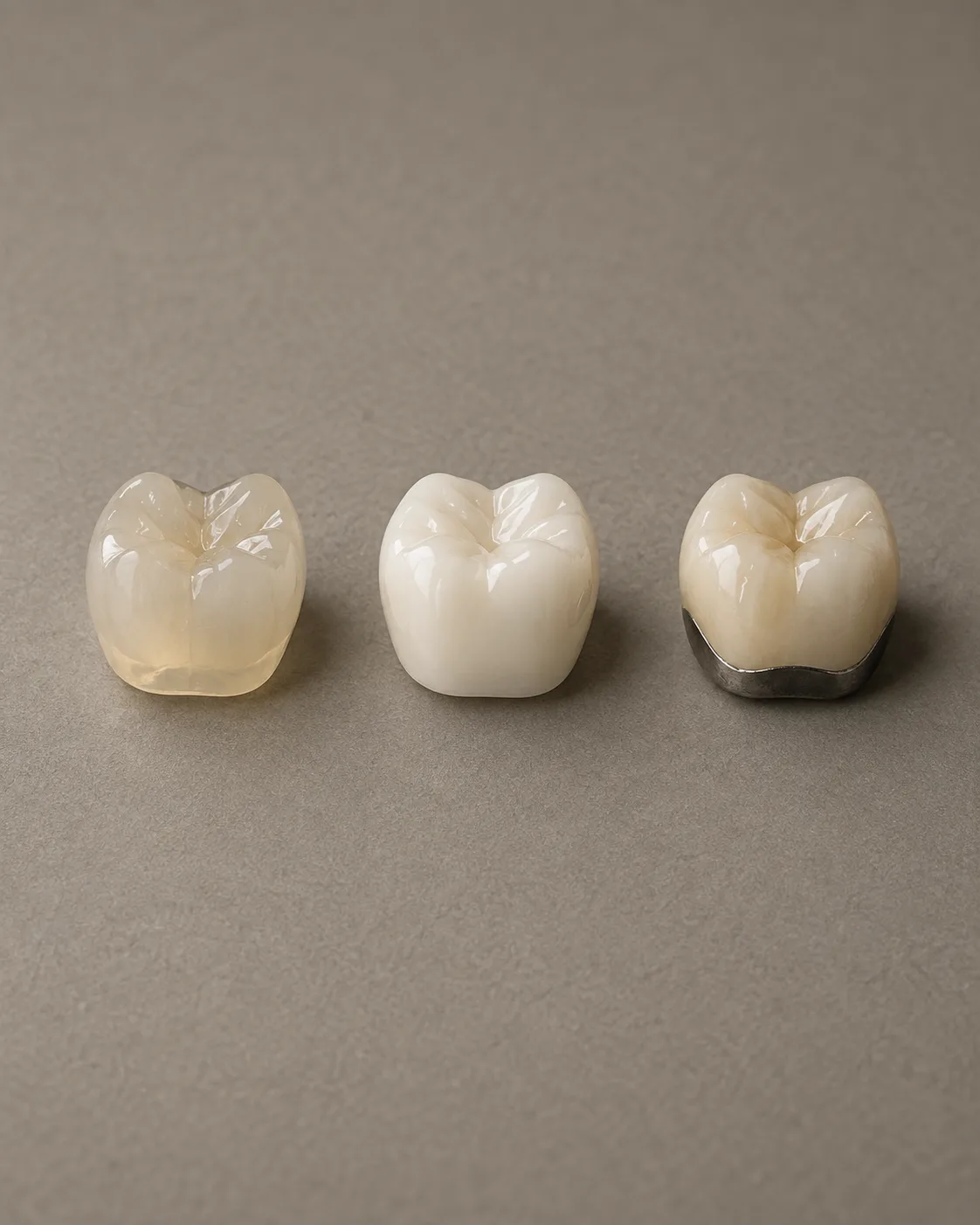
There is no best material, only the right one for each tooth. Front teeth are usually about how the light passes through; back teeth are about the bite. Your plan names the material for every tooth before you pay anything.
Material
How it looks
How strong
Best for
E-max (lithium disilicate)
The most lifelike. Light passes through it the way it passes through enamel.
Strong enough for any front tooth and for single crowns.
Veneers and front crowns, where looks matter most.
Zirconia
Bright and slightly more opaque, which is useful over a dark tooth.
The strongest ceramic there is. It does not chip.
Back teeth, bridges, full arches and heavy biters.
Layered zirconia
A zirconia core with porcelain layered on by hand for a natural surface.
The strength of zirconia underneath, the finish of porcelain on top.
Full smile makeovers that need both strength and looks.
Metal-ceramic
Porcelain over a metal cap. A dark line can show at the gum in time.
Proven over decades.
Back teeth where cost matters more than looks.
Six steps in the laboratory upstairs
How each piece is made
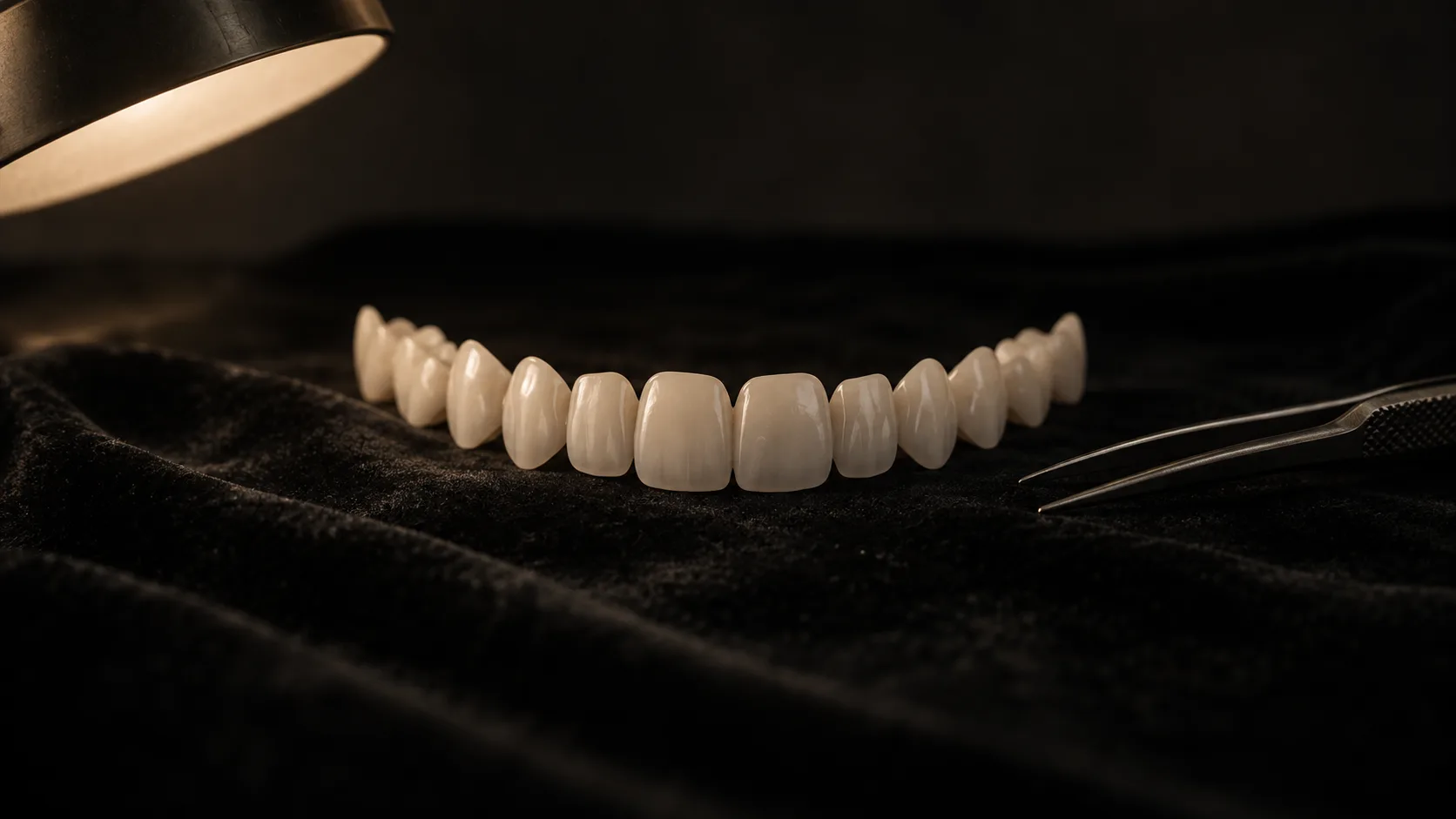
Every veneer and crown is made for one tooth in one mouth, in a laboratory inside the clinic building, so a try-in and an adjustment happen the same day rather than after a courier. Machines do the measuring and the cutting; people do the colour, the surface and the final check against your own teeth.
01The scanA digital scanner records your prepared teeth in a few minutes. No trays of impression putty.
02The designA technician designs each tooth on screen against your photographs and the trial smile you approved.
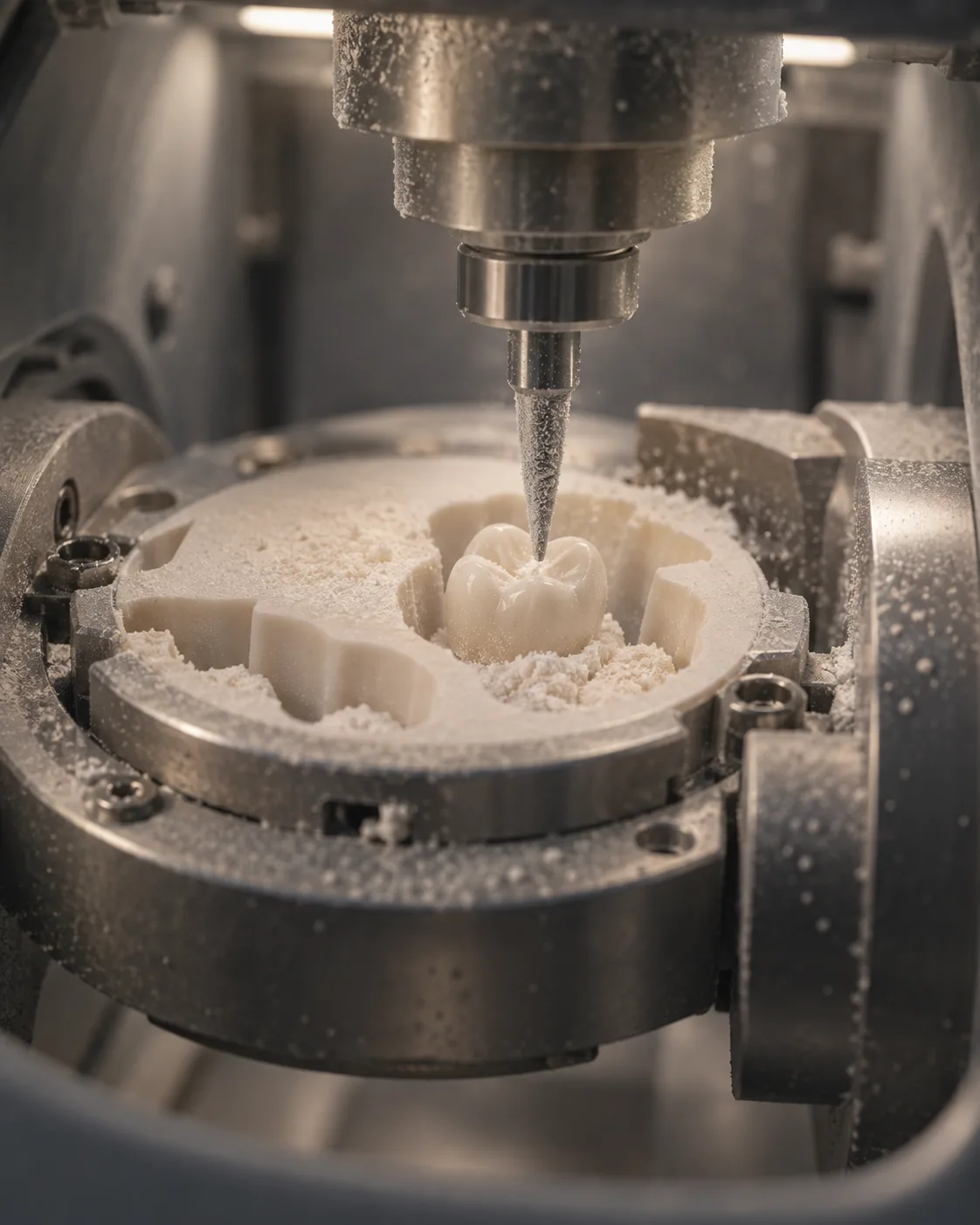
03MillingThe design is cut from a solid disc of zirconia, or pressed from an E-max ingot, to a tenth of a millimetre.
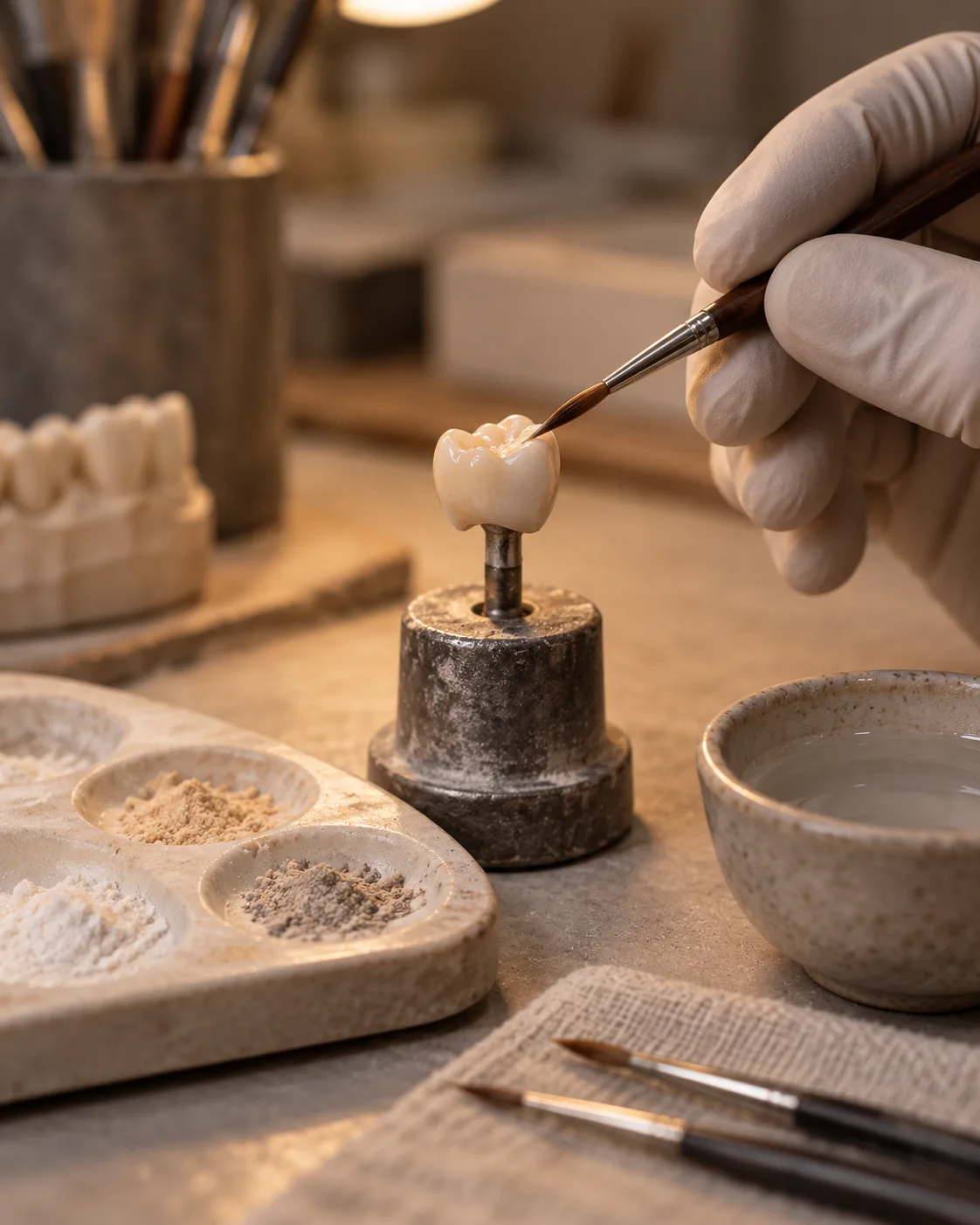
04LayeringPorcelain is painted on by hand in thin layers to build the depth and translucency of a real tooth.
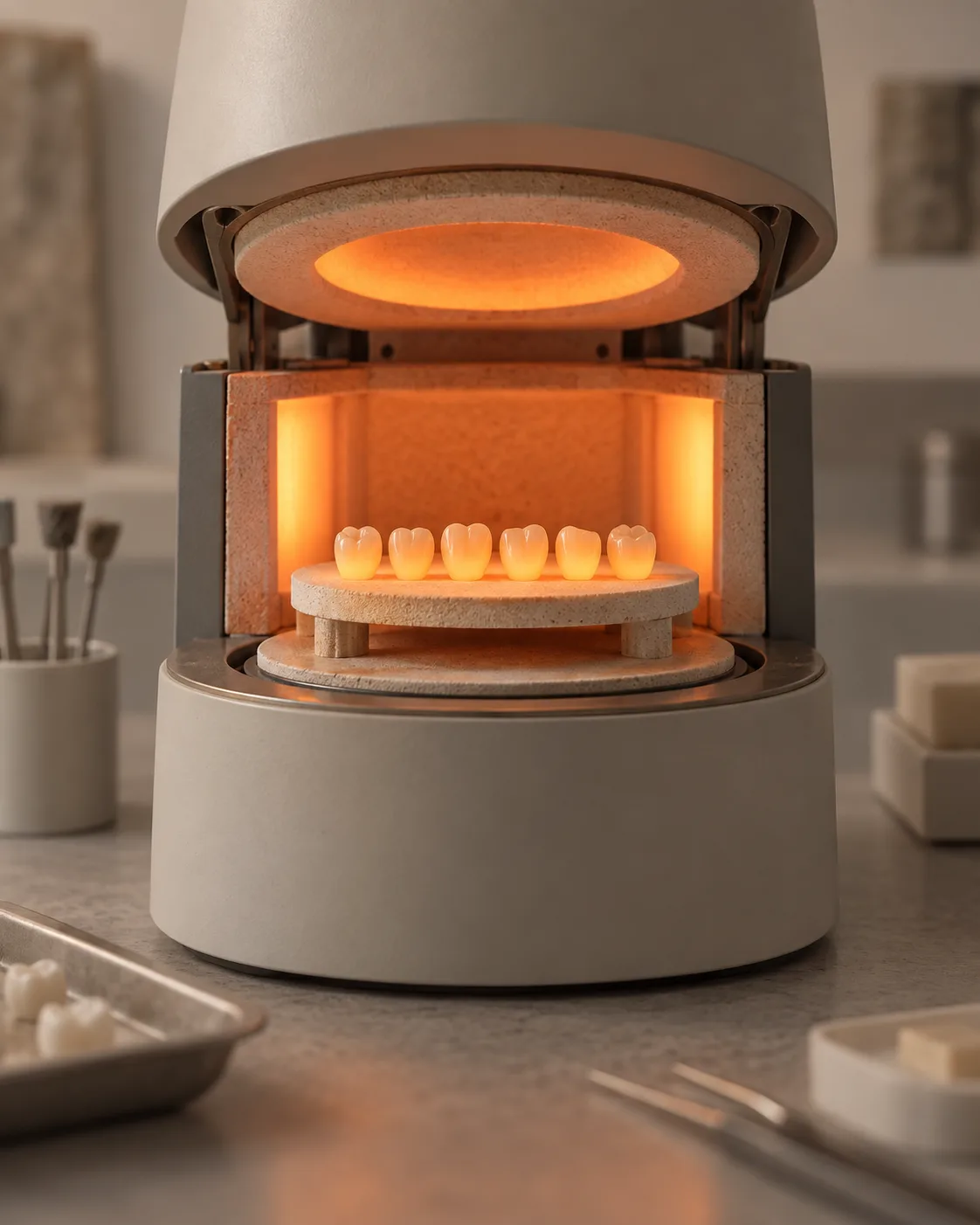
05Firing and glazingEach piece is fired, then stained and glazed by hand and checked against your shade tab in daylight.
06The try-inEvery piece is tried in and adjusted before it is bonded. You approve it in the mirror first.
Answered plainly
Smile makeovers: your questions answered
Still not sure? A clinician talks it through before you commit to anything.
It depends entirely on what is in it. Every component is published - whitening £200, bonding £140 a tooth, E-max veneers £210, crowns from £200 - so a plan is a sum you can check, not a quote you have to trust.
Do I need veneers for a smile makeover?
Often not. Plenty of makeovers are whitening plus bonding, or aligners plus whitening. Veneers are for when colour and shape both need changing permanently.
How long does it take?
A week for a veneer-and-whitening case. Months if aligners or implants are part of the sequence, because teeth and bone move at their own speed.
Will it look obvious?
Not if the shade and proportions are chosen against your face rather than from a brochure. You will see a mock-up before anything permanent is made.
What is the right order?
Straighten, then whiten, then match anything permanent to the result. Porcelain will not lighten later, so doing it in the wrong order means paying twice.
Is a smile makeover the same as "Turkey teeth"?
No, and the difference is enamel. Those stories are healthy teeth cut down for full-coverage crowns. Ask which of your teeth are being crowned and why, and get it in writing.
Can I do it in stages?
Yes, and for larger plans it is often better - whitening and aligners at home, the restorative work in one trip.
What if I do not like the result?
Say so at the mock-up, which exists precisely for that. Once porcelain is fired, changes mean remaking it.
Do you take payment for flights and hotels?
No. We show you real availability and you book it yourself in your own name, so the consumer protection stays with the airline and the hotel.
Why choose us
Why Choose Opus Smile for Your Smile Makeover
01UK-backed aesthetic dentistry
02Minimal-prep smile design
03Safe, clear, modern
Our focus is your result. We set clear expectations, give honest guidance, and support you from first message to final polish. Every clinic partner is vetted for safety, outcomes, and patient experience. Your makeover is digitally designed around your face, bite, and goals, using named, traceable materials.
You keep the best of both worlds: significant savings versus typical UK private fees plus a written warranty and UK-based aftercare. No bait pricing. No pressure. We assess first, explain options, and confirm exact costs only after proper diagnostics.
Tell us what you need. We will price it in writing.
One message and a coordinator replies with an indicative plan and price. Send a photograph of your smile if you have one - it makes the answer better, and it is never a call unless you ask for one.
We use a few cookies to keep the site working - your language, your currency, and your
session if you are signed in. Those are always on because the site cannot work without them.
We would also like to use one that measures how people find us and pays us a commission
on travel booked through the site. That one is entirely your call.
Read the privacy policy.